
Selecting the proper factory cooling method can seem like a careful balance between initial spending and steady monthly power charges. If your site deals with rising energy expenses or uneven cooling in busy summer times, you probably have an efficiency gap. Older setups often cannot adjust to changing demands. This leads to lost power and added wear on parts. This piece acts as a roadmap to guide you through these choices. It compares effective screw options. In this way, your pick will fit your daily work and keep costs down.
MOON-TECH has worked for 70 years on managing temperature and pressure. The firm started in 1956. It has grown into a worldwide expert in smart cooling and heating setups. People know it for care toward the environment and saving energy. From UN honors for ozone protection to leading shares in areas like hydropower and CCUS, MOON-TECH uses its deep research to offer Full Life Cycle Services and full Whole Industry Chain help.
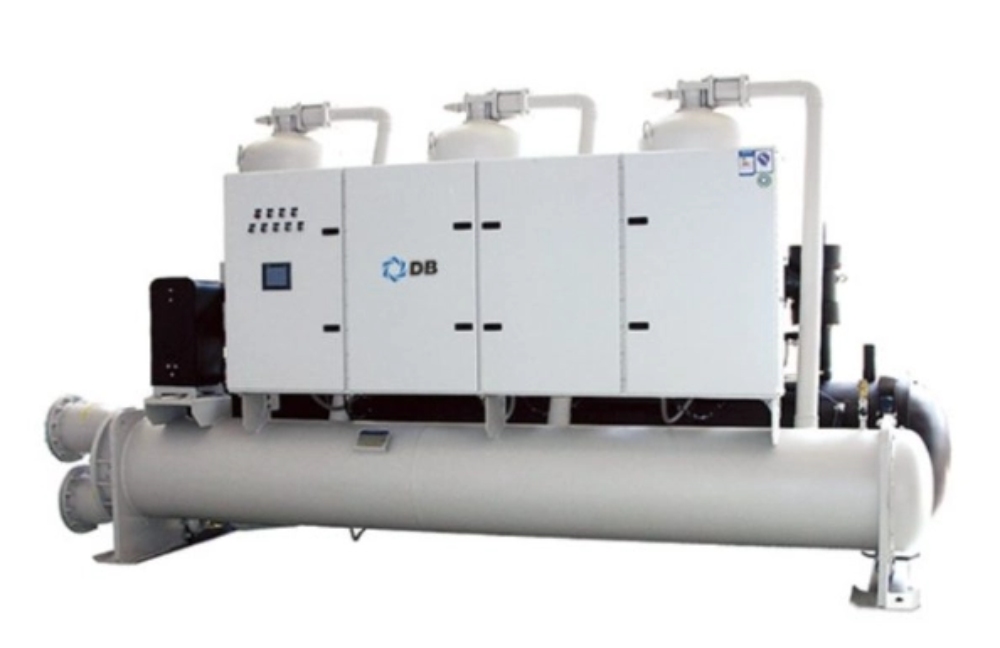
Decoding the Energy Efficiency Ratio in Modern Industrial Cooling Systems
Learning about the Energy Efficiency Ratio (EER) marks the start of gaining hold on your site’s power use. Many things affect how well it runs. Yet, the main efficiency comes from how the compressor deals with your process’s heat needs.
Definition of EER and Its Impact on Operational Costs
EER shows the cooling amount compared to the power it takes. In real terms, a better EER gives you more chill per dollar on electricity. For tough jobs, a small rise in this measure can mean millions of RMB saved each year. This holds true especially for big factory efforts.
Overview of Screw Compressor Technology for High Load Efficiency
Screw compressors serve as the main drivers in the field. They keep steady work under different loads. These devices use bilateral asymmetric full-arc envelope profiles. Such profiles reduce contact gaps and raise volume efficiency. This rotor setup allows smooth, endless capacity changes. It shifts from 10% to 100% to fit your real cooling needs. Thus, it avoids energy loss from too much starting and stopping.
Core Differences Between Air Cooled and Water Cooled Heat Pump Units
The basic split comes from how they remove heat. One type uses outside air over finned pipes. The other depends on water and a follow-up heat swap. Your job’s spot, weather, and water supply will decide which way gives the better EER for your firm.
Strategic Advantages of Air Cooled Screw Chiller Units
Many firms like air-cooled setups for their freedom from tricky water systems. If your place sits where water lacks or costs much to handle, an Air-cooled screw chiller (heat pump) unit gives a direct route to smooth running.
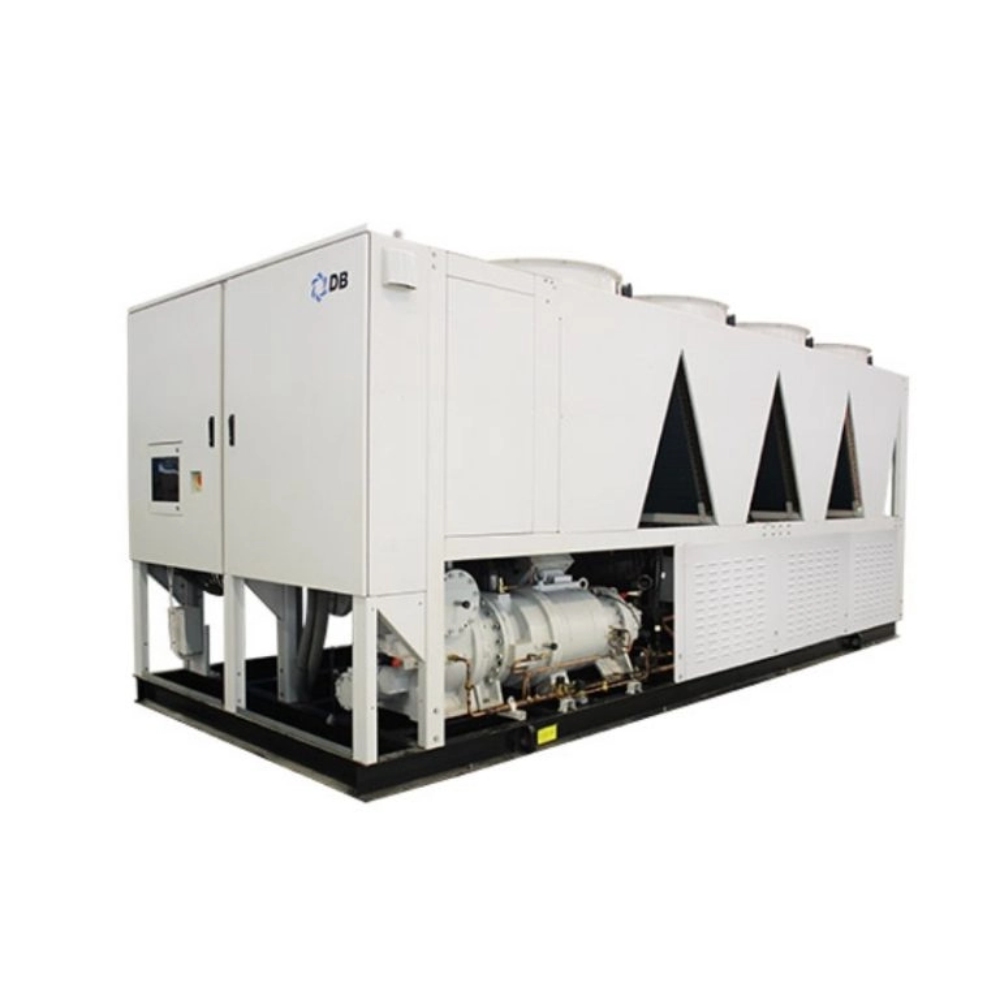
Minimal Maintenance Requirements for Outdoor Installations
Air-cooled units skip the need for cooling towers, water pumps, and broad chemical treatments. This makes the whole system much simpler. Upkeep expenses for them usually run at 20% to 30% of water-cooled ones. You avoid the regular scale removal and cleaning that water-based heat parts demand.
Superior Performance in Water Scarce Industrial Environments
In spots where water supply limits things, these units stand out. They draw on outside air for cooling. This saves water and cuts waste output. Such choices support the environment. They also ease picking a site. You do not tie to a big water supply line.
Comparison of Installation Speed and Structural Footprint
These units often come skid-mounted and put together at the plant. So, they set up very quickly. You just connect power and pipes for the use side, like plug and play. The list below points out usual site needs for an air-cooled arrangement.
Outdoor Ventilation: Requires ample space for unrestricted airflow to prevent hot air recirculation.
Structural Support: The roof or ground pad must handle the unit’s operating weight, which can be several tons for large models.
Ambient Temperature Range: Reliable performance even in extreme conditions, with some models capable of operating down to -40°C.
Technical Superiority of Water Cooled Screw Chiller Units
When top heat output matters most, water-cooled setups usually come first. A Water-cooled screw chiller (heat pump) unit suits large factory plants with steady, heavy cooling tasks.
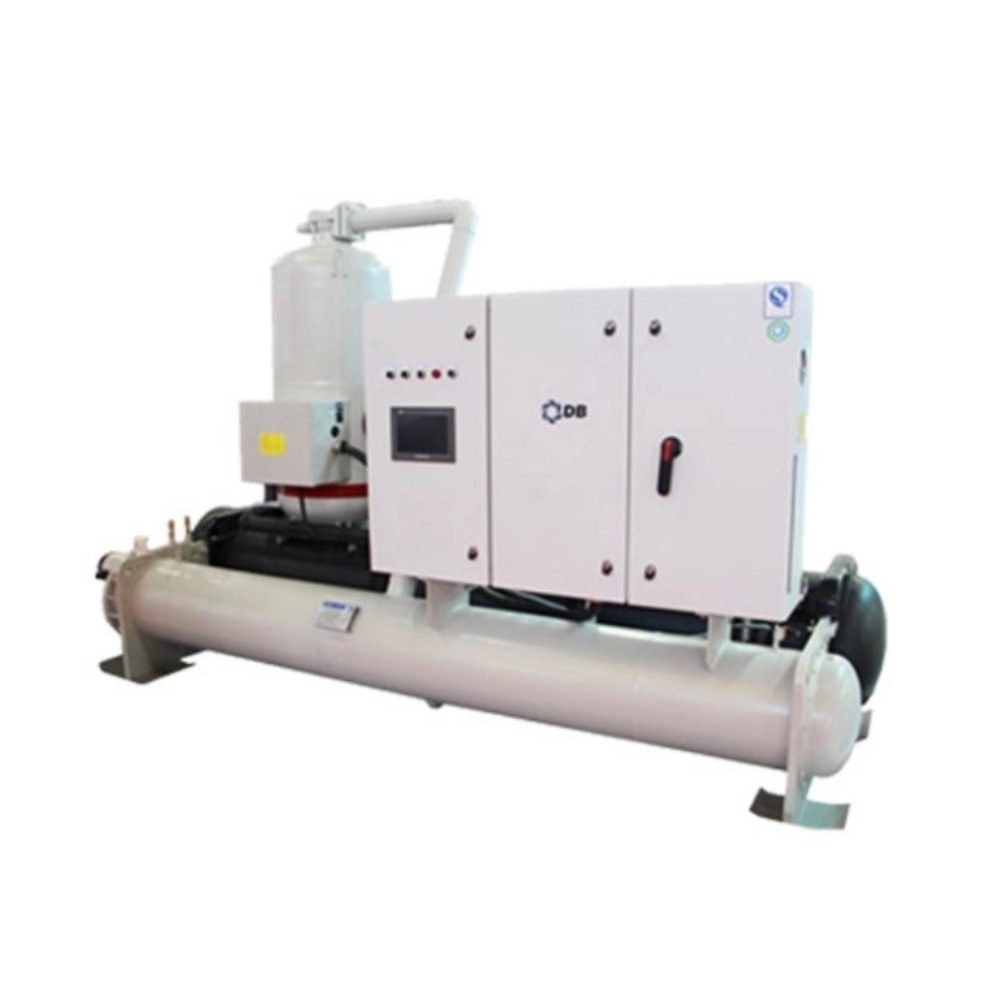
Maximum Heat Exchange Efficiency for Large Scale Operations
Water carries heat far better than air. With shell-and-tube or plate exchangers, these units reach tight temperature gaps. This raises the compressor’s output right away. In large works like hydropower or nuclear sites, where heat control stays strict, water-cooled screw units deliver the needed accuracy.
Stable Cooling Capacity Regardless of Ambient Air Temperature
Air-cooled units can drop output as outside heat climbs. Water-cooled ones hold steady well. They use a cooling tower or firm water like ground or reused sources. This keeps the condensing heat even. So, your process avoids drops in summer.
Key Efficiency Indicators and Power Consumption Analysis
People measure these units’ output with the Coefficient of Performance (COP). In some waste heat reuse cases, a good heat pump hits a COP of 3.4. This saves millions in heat costs by lifting low-level waste power. The table below gives a fast look at usual output traits.
| Feature | Air-Cooled Unit | Water-Cooled Unit |
| Typical COP/EER | Moderate | High to Very High |
| Water Consumption | Zero to Low | High (Requires Makeup) |
| Maintenance Needs | Low (Fan/Coil focus) | High (Tower/Pumps/Water) |
| Installation Site | Outdoors/Roof | Indoor Machine Room |
| Climate Sensitivity | Affected by Air Temp | Affected by Wet-Bulb Temp |
Critical Factors for Selecting Your Ideal Energy Efficient System
Picking between these options goes beyond the device. It ties to your work’s setting and future aims. You must review your surroundings and plans before any buy deals.
Assessment of Local Climate Conditions and Wet Bulb Temperatures
In wet, warm areas, wet-bulb heat limits tower work in water-cooled setups. In dry zones, air-cooled units meet high outside air that pushes the compressor more. A full check of your local weather facts stays essential. This helps pick the unit that reaches its listed EER at your place.
Long Term Return on Investment Calculation for Various Sectors
Air-cooled units may cut setup and water costs. However, water-cooled ones’ better output often shortens payback in power-heavy fields like chemical work or Logistics Industry cold storage. For example, swapping bought steam with a heat pump in an oil site saved about 2.7 million RMB per season.
Environmental Regulations Regarding Refrigerants and Energy Usage
Current rules push for low-carbon paths. Using natural coolants like CO₂ or ammonia (NH₃) cuts your Global Warming Potential (GWP) a lot. It also meets the Montreal Protocol. Choosing setups with heat reuse turns waste heat to 95°C water for washing. This strengthens your eco standing and power scores.
Innovation and Manufacturing Quality in Screw Heat Pump Technology
Your cooling setup’s dependability matches the care in its parts. Fine building means more than talk. It explains why a unit runs 20 years, not five.
Advanced Screw Rotor Profiles for Optimized Compression Ratios
Leading units have rotors shaped by exact CNC tools from the UK or Germany. This care makes inside contact firm. It lowers leaks within and allows higher compression. Such features matter for cold jobs like fast-freezing meat or fish.
Integration of Intelligent Control Systems for Part Load Efficiency
Auto features stop people mistakes from raising bills. Smart platforms now give AI alerts for upkeep. They warn 12 hours before issues hit. These also check air moisture and work schedules. Then, they make cooling need lines with under 5% off. So, the unit runs only as required.
Selection of Durable Materials for Extended Equipment Lifespan
Factory settings can prove rough. Units with stainless steel exchanger tubes and rust-proof layers stop output drops from corrosion or buildup. For sea work, special salt-water materials like titanium or aluminum brass keep the system going in wet, salty air.
Maximizing Your Growth With MOON-TECH Integrated Solutions
Handling these details can feel heavy. That is why a partner who knows the full equipment life proves key. MOON-TECH gives more than gear. They map a way to power self-rule.
Through Full Process Consultation, you get pro planning from start to end setup. If you build a big cold chain logistics area or update a chemical brine setup for 21% power cuts, the aim stays on safe, steady systems. These fit your exact heat and pressure wants. To improve your factory cooling, contact for a custom price via the Contact Us page. This begins your path to better output.
FAQ
Q1: What is the main benefit of an air-cooled screw chiller for my factory?
A: The biggest draw is that it requires no water infrastructure, meaning you save on cooling tower costs, water treatment, and the heavy maintenance associated with water systems.
Q2: Can screw chillers handle extreme outdoor temperatures?
A: Yes, certain high-performance models are designed to operate in ambient temperatures as low as -40°C, making them suitable for harsh climates.
Q3: How much energy can I save by utilizing waste heat recovery?
A: Depending on the process, recovering condenser waste heat to produce hot water or steam can achieve energy savings of 40% or more compared to using traditional boilers.
Q4: Is the Logistics Industry better suited for air-cooled or water-cooled units? A: It depends on scale; large-scale logistics centers often prefer water-cooled units for their higher efficiency (COP), while smaller or water-scarce sites benefit from the simplicity of air-cooled systems.
Q5: What refrigerants are considered “future-proof” for these systems?
A: Natural refrigerants like CO₂ and ammonia (NH₃) are ideal because they have zero ozone depletion potential and ultra-low global warming potential, ensuring long-term regulatory compliance.