
The year 2026 draws nearer on the calendar than you might think. If you operate a cold storage site or a food processing factory, you have probably heard about coming carbon taxes and tougher GWP (Global Warming Potential) rules. This is no longer mere chatter. Governments now tighten controls on high-emission refrigerants, and the money hit will prove real. To get ahead, you require a partner with decades of industry knowledge. تقنية القمر, marking 70 years of engineering skill, serves as that partner. From its start in 1956 to its role as a world leader in cryogenic refrigeration and energy-chemical equipment, it delivers more than mere parts. The company supplies a full business chain of research and smart aid. For large food freezing jobs or tricky gas cooling, their حلول مفتاحية و 24/7 intelligent service make your shift to a low-carbon path both money-saving and rule-following.
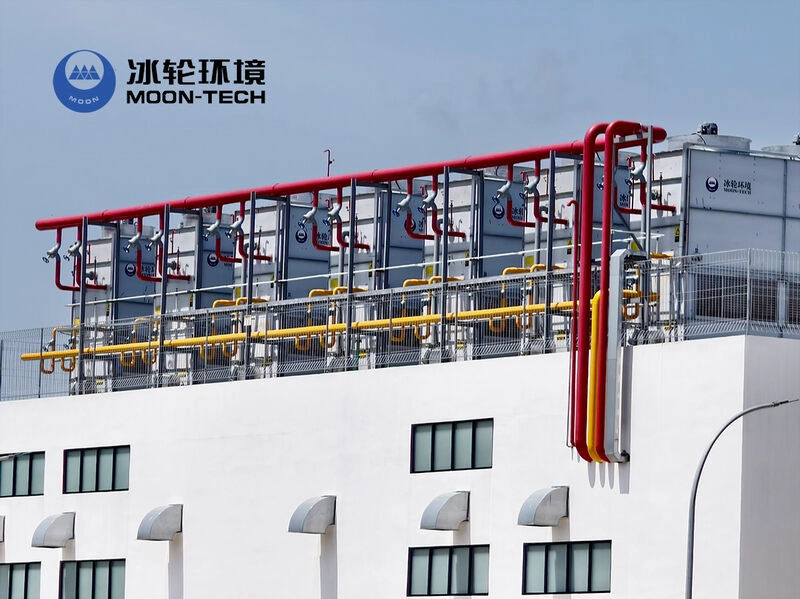
Urgent Strategies to Mitigate Upcoming Global Carbon Tax Risks
Handling changes in green laws can seem like an extra task you did not choose. By 2026, business costs will include a big fee for each ton of carbon your cooling gear releases or uses. This goes beyond simply acting green; it concerns staying in business. If your factory still uses old synthetic gases, you face a growing tax threat.
Compliance with 2026 International Green Regulations
To follow rules, you must watch the cutback of HFCs and new regional carbon border fees closely. These standards apply to all sizes of cold chain firms, not just large ones. Mid-sized operators may lose market access if their carbon mark stays too high. The aim is to shift to zero-emission setups before fines begin, which helps avoid future troubles.
Significant Financial Impacts of Carbon Border Adjustments
Carbon taxes act like an ongoing extra bill for power. If your gear lacks efficiency, you pay in two ways: first for lost power, and second for the emissions that follow. In certain areas, these fees could take up to 15% of your yearly profit edge. This fact pushes high-efficiency setups as the clear next step.
Strategic Migration to Low Global Warming Potential Systems
The best action now involves changing to natural refrigerants such as Ammonia (NH₃) or CO₂. These materials show almost zero GWP, so they face no taxes. Updating your site with these options clears your green path and guards your profits for the next two decades. Such a move builds long-term security.
Advanced Technologies for Industrial Carbon Emission Reduction
Tech has advanced far from the large, leaking compressors of old times. Current systems stress accuracy and blending. You seek gear that manages heat without draining your funds. For tough industrial work, proper tools decide if your site succeeds or just gets by.
Transition from Synthetic Refrigerants to Natural Solutions
The field returns to simple roots, but with modern upgrades. Natural refrigerants now set the standard. For big seafood handling and cold storage, NH₃/CO₂ cascade systems gain favor. A recent major setup of this kind showed that large cooling power can pair with full eco-friendliness. This proves the tech works in real use.
Integration of Flooded Low-Temperature Brine Chillers
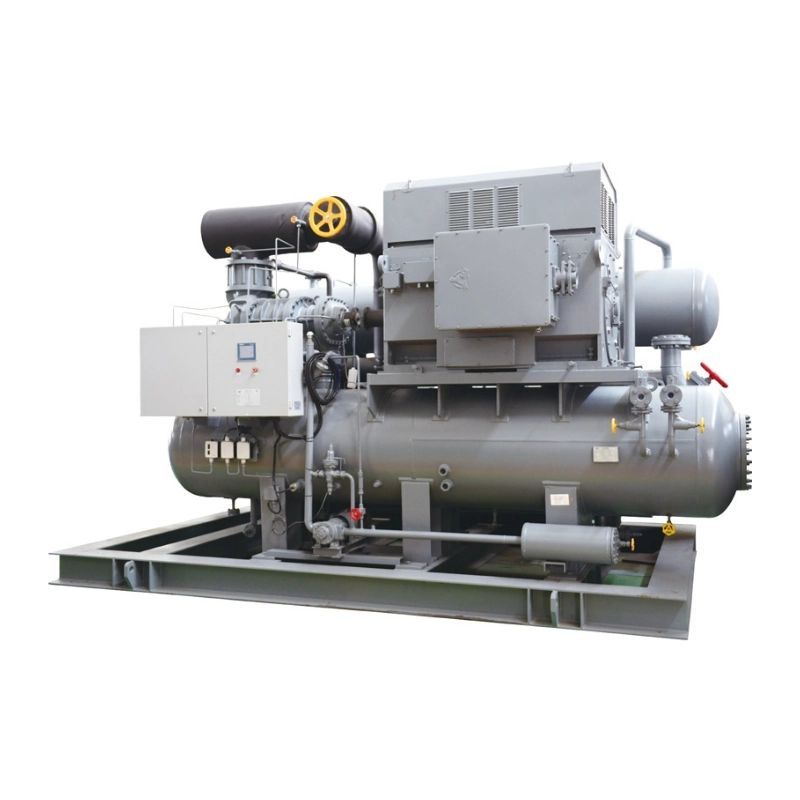
For steady deep cooling, the غرق منخفض درجة الحرارة المبرد الملح serves as a strong option. These devices fit high-efficiency needs in hard settings, with a flooded evaporator that boosts heat movement. This tech holds your goods at ideal levels without power jumps that lead to carbon fees. It supports smooth daily runs.
Optimization of Energy Consumption in Cooling Cycles
Power loss often hides in cooling process details. Advanced oil flow and rotor shapes in new compressors cut inside rubbing. Less rubbing leads to lower power needs. When you add up these small wins in a round-the-clock site, the gains cover your next growth step. This focus keeps costs down over time.
Efficient System Design for Long-term Operational Savings
Solid design matters not just for factory looks, but for action during night peaks. You need gear that fits your real demands, not full speed always. Smart building here returns its cost quickly.
Performance Advantages of NJ Series Screw Compressor Units
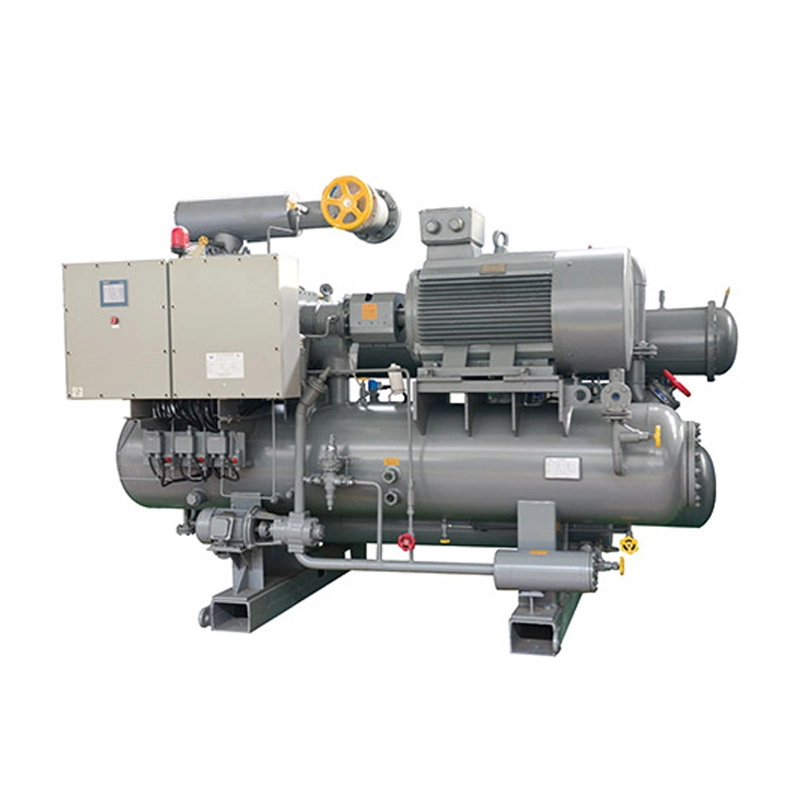
For jobs needing change, the NJ سلسلة المسمار ضاغط تكثيف وحدة excels. These include energy shift tools that keep work efficient at half loads. Built from over 60 years of making skill, they follow a “steady and dependable” idea that holds repair costs low. Such features aid ongoing success.
Reduction of Indirect Emissions through High Efficiency
Leaks cause direct emissions, but power sources create indirect ones. High-efficiency gear cuts your “Scope 2” emissions. This counts because 2026 rules will charge your full energy mark, not only pipe gases. Better efficiency thus lowers total tax risks.
Comparison Table of Energy Savings and Tax Reductions
| نوع النظام | Typical GWP | Annual Carbon Tax Estimate (2026) | كفاءة الطاقة (COP) |
| Old R404A System | 3922 | عالية | 2.1 – 2.5 |
| Modern NH₃/CO₂ | 0 – 1 | Zero | 3.2 – 3.8 |
| NJ Series Units | Low/Varies | الحد الأدنى | 3.5+ |
Sustainable Cooling Solutions for Diverse Industrial Applications
If you cool chicken or run a 6,000-ton CO₂ cold storage in Malaysia, needs stay unique. Industrial cooling lacks a single fit for all. You require a system that grasps your product’s details, from fast freezing to exact moisture control.
Implementation in Large-scale Food Processing Facilities
In chicken or meat work, quick action matters most. You need fast-freeze power that holds up as amounts grow. New setups often pick two-stage screw compressors for the big drop to low temperatures, which keeps food cells whole for higher quality. This method ensures better end results.
Carbon-neutral Infrastructure for Modern Cold Storage Logistics
The shift heads to “green” storage sites that blend auto stacking with low-carbon cooling. Linking cranes and software with strong refrigeration boosts space use and cuts heat loss. This full plan makes the whole supply line more earth-friendly. It supports lasting growth.
Key Features List of Eco-friendly Refrigeration Equipment
1.Natural Refrigerant Compatibility: Support for R717 (Ammonia) and R744 (CO₂).
2.Intelligent Control: Systems that use BIM design and AI-driven predictive maintenance.
3.Modular Design: Skid-mounted units that allow for rapid installation and “plug-and-play” functionality.
Future-proof Engineering and Global Service Support
Purchasing gear marks the beginning of ties. In industry, a low-cost item without parts proves the biggest error. You need a helper that aids through the full life, from first sketch to upgrade after ten years.
Lifecycle Management of Sustainable Refrigeration Assets
Asset care views the full ownership cost. This covers start price, power fees, upkeep, and end removal. Gear with fine cast parts and own property rights lasts more and keeps worth as green markets change. Such quality aids value over years.
Professional Consultation for Carbon Footprint Optimization
You ought not guess emission cuts. Expert teams now apply digital copies and BIM models to test site work. This spots pipe blocks or power leaks before you start rebuilds. Early finds save big later.
Reliable Maintenance Services for Peak System Performance
Top gear still requires checks. With round-the-clock aid promises, you keep systems at best COP. Routine care stops “efficiency slide” that raises power costs and tax risks slowly. This holds strong output.
أسئلة متكررة
Q1: What is the most cost-effective refrigerant for 2026?
A: For large industrial applications, Ammonia (NH₃) remains the most efficient and cost-effective natural refrigerant due to its excellent thermal properties and zero-tax status.
Q2: Can I retrofit my existing system to avoid carbon taxes?
A: In many cases, yes. Upgrading to more efficient screw compressor units or switching to a brine-based cooling loop can significantly lower your emission profile without a total rebuild.
Q3: Why are flooded chillers better for carbon reduction?
A: Flooded chillers allow for a closer approach temperature between the refrigerant and the process fluid, which improves the overall system efficiency and reduces the workload on the compressor.
Q4: How does the 2026 regulation affect Southeast Asian markets?
A: Many countries in the region are adopting green building standards and emission reporting requirements to stay competitive in global supply chains, making low-GWP systems a requirement for exporters.
Q5: Is CO2 refrigeration safe for food processing?
A: Absolutely. CO₂ is non-toxic, non-flammable, and occurs naturally. It is widely used in cascade systems to provide safe, high-capacity cooling for everything from seafood to vegetables.