
CO transcritique ₂ Les systèmes de réfrigération sont devenus un choix pratique et écologique au lieu des réfrigérants synthétiques habituels. Cela est particulièrement vrai dans les entreprises et les usines où le respect des règles environnementales et l'utilisation judicieuse de l'énergie sont essentiels. Pourtant, les contrôler en mode transcritique apporte des problèmes techniques et quotidiens de fonctionnement spéciaux. Obtenir une maîtrise de ces détails est essentiel pour construire un plan de contrôle solide et flexible qui maintient les performances, la sécurité et la fiabilité.
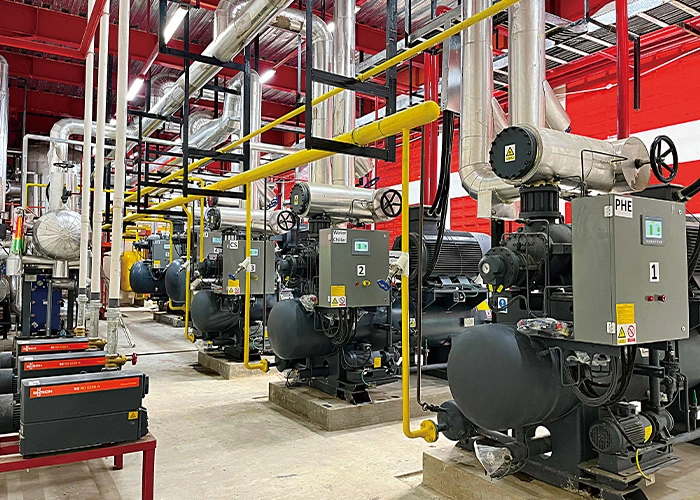
Si vous voulez des corrections personnalisées et fraîches pour CO ₂ configurations, MOON-TECH fournit une technologie de réfrigération complète façonnée par plus de 60 ans de travail pratique. En tant que plus grand fabricant de compresseurs à vis en Chine et pionnier en CO ₂ Avec les avancées en matière de réfrigération, les solutions clé en main de MOON-TECH s’occupent de tout, de la mise en place du système à l’entretien, en aidant les domaines mondiaux tels que l’alimentation, le transport, la manipulation des produits chimiques et d’autres. Avec une forte poussée pour la technologie verte et une large diffusion de services, ils donnent aide au cycle de vie complet en utilisant le savoir-faire local dans plus de 120 pays.
Quels sont les principaux défis dans le contrôle des systèmes de réfrigération au CO2 dans les applications transcritiques?
Ces systèmes font face à plusieurs obstacles majeurs qui nécessitent une manipulation intelligente pour maintenir le fonctionnement en douceur.
Gérer les températures ambiantes élevées ?
CO transcritique ₂ Les systèmes fonctionnent au-dessus du point critique du dioxyde de carbone (31,1 °C), et la condensation traditionnelle n'y a tout simplement pas lieu, ce qui pose un problème central dans les milieux extérieurs chauds où le contrôle de la pression devient inégal et difficile. Lorsque les températures extérieures augmentent, la pression de sortie du refroidisseur de gaz doit être manipulée avec soin pour éviter les déchets du système et le fonctionnement tremblant.
Une mauvaise élimination de chaleur réduit la sortie du système, en particulier lorsque la température ambiante approche ou dépasse la marque critique, et les méthodes de contrôle flexibles telles que le déplacement des objectifs de pression et les ajustements de vitesse du ventilateur sur place deviennent clés pour arrêter les surcharges du compresseur tout en maintenant des pressions latérales élevées constantes.
Assurer l'efficacité du système à travers les variations de charge?
Les changements de charge entraînent des changements qui touchent les pièces principales telles que les compresseurs et les éjecteurs, et dans les opérations à faible charge, une capacité trop élevée ou une utilisation insuffisante peut réduire considérablement le coefficient de performance (COP) du système, ce qui provoque une perte d'énergie.
Pour maintenir la puissance de la sortie, les systèmes ont besoin de configurations de contrôle dynamiques qui correspondent au travail partiel aux besoins réels, donc, par exemple, le réglage des compresseurs sur l'entrée de pression d'aspiration permet d'adapter la capacité aux appels de refroidissement sans ajouter de coups de puissance.
Équilibrer les objectifs environnementaux avec la fiabilité opérationnelle?
CO₂ fonctionne comme un réfrigérant naturel sans risque de dommage à l'ozone et faible effet de réchauffement climatique, mais son fonctionnement à des pressions élevées nécessite une configuration du système exacte, et la résistance de la partie dans ces endroits à haute pression est très importante, principalement pour une utilisation écologique continue.
En outre, les règles de contrôle doivent combiner étroitement les limites de sécurité, comme les points de soulagement de pression, avec les objectifs écologiques, de sorte que le système réponde aux configurations légales et aux normes écologiques internes sans réduire le temps de fonctionnement ou la norme du produit.
Composants clés influant sur les performances du contrôle du système
Certaines pièces jouent un rôle important dans le fonctionnement global du contrôle dans ces CO ₂ systèmes.
Rôle des compresseurs dans la correspondance de charge et la stabilité
Les compresseurs constituent le noyau de tout CO ₂ système, et leur capacité à ajuster la capacité à différentes formes de charges thermiques en cours de sortie immédiatement. Dans les configurations à plusieurs températures ou les configurations mixtes de booster, la liaison du travail du compresseur aux besoins reste essentielle pour la stabilité de la pression d'aspiration.
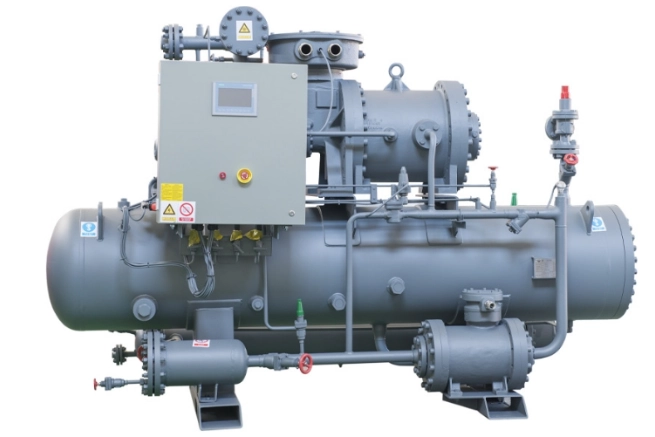
Le Unité de compresseur de réfrigération à vis semi-hermétique permet des changements de capacité faciles grâce à des configurations latérales multi-compresseurs et à des systèmes automatiques intégrés qui maintiennent des ajustements précis sous des états de haute pression.
Impact des éjecteurs sur l’efficacité énergétique et la gestion de la pression
Les éjecteurs sont plus utiles pour augmenter la traction énergétique de l'étape d'expansion, donc en remettant la vapeur de réfrigérant dans le côté d'aspiration des compresseurs à température moyenne, ils réduisent l'effort de compression et les pressions de l'évaporateur régulières.
Cela augmente la production dans les utilisations à température moyenne, en particulier lorsque le sous-refroidissement mécanique standard peut ne pas convenir ou coûter correctement.
Importance des échangeurs de chaleur dans la régulation thermique
Les échangeurs de chaleur, principalement les refroidisseurs à gaz et les évaporateurs, répondent rapidement au système de forme, et leur taille et leur choix de matériau décident à quelle vitesse le système se déplace pour changer de charge sans aller trop loin ou s'accrocher.
Un flux de chaleur fort améliore le sous-refroidissement et la COP complète, de sorte que le choix des types de noyau d'ailettes en acier inoxydable / aluminium maintient une résistance à haute pression tout en soutenant l'échange de chaleur supérieur pour le CO ₂ traits.
Applications qui bénéficient des systèmes de réfrigération au CO2 transcritique
Ces systèmes s'adaptent bien dans divers endroits du monde réel où les exigences de refroidissement varient.
Supermarchés et hypermarchés avec profils de charge variables
CO₂ Les systèmes fonctionnent bien dans les endroits où les portes s'ouvrent apportent des décalages réguliers de charge thermique et des compétences de réponse rapide soutenues par le réglage des compresseurs et des règles du ventilateur pour une meilleure stabilité de température tout en économisant de l'énergie.
La puissance de sortie améliore le rendement sur investissement par rapport aux anciens réfrigérants grâce à un risque de fuite plus faible et à un travail thermodynamique plus fort.
Entrepôts à froid opérant dans des climats chauds
Les systèmes transcritiques maintiennent la puissance de refroidissement même pendant les saisons chaudes en utilisant des règles de refroidissement à gaz vigoureuses et des boosts d'éjecteur, de sorte que le système maintient la sortie malgré les températures extérieures élevées, ce qui en fait un bon choix pour les zones avec de longues hauteurs estivales.
De plus, leur réfrigérant naturel soutient les objectifs mondiaux zéro carbone dans le transport de la chaîne du froid.
Refroidissement industriel nécessitant la conformité environnementale
Les étapes d'usine qui nécessitent une manipulation exacte de la température gagnent grâce au contrôle facile des systèmes transcritiques et au marquage vert, de sorte qu'il répond aux règles mondiales relatives aux gaz F avec le réfrigérant naturel CO ₂, remplir les appels juridiques tout en donnant une sortie constante à travers les charges de processus changeantes.
Le GEPT-R290 CO2 Unité de réfrigération à changement de phase à haut rendement traite les problèmes de rouille métallique dans les systèmes secondaires à base de saumure tout en donnant un COP élevé grâce à une conception d'échange de chaleur réglée.
Pourquoi choisir MOON‑TECH pour les solutions de réfrigération au CO2 transcritique ?
MOON-TECH’ La recherche dédiée sur les systèmes de réfrigération écologiques permet une optimisation précise de chaque détail en CO ₂ conception de systèmes, de la fabrication de composants à l'intégration à part entière de l'usine.
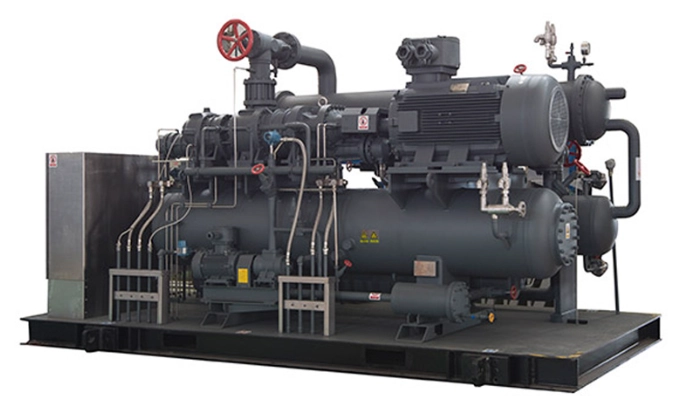
La gamme de MOON-TECH contient des unités de blocs avec contrôle intégré, sécurité et manipulation d'huile destinées au CO ₂ fonctionnement, et des produits comme l'unité à vis semi-hermétique et GEPT-R290 montrent cette poussée pour la résistance dans les états durs. GEPT-R290 CO ₂ L'unité de réfrigération à changement de phase à haute efficacité s'adapte en douceur aux systèmes transcritiques, donnant un travail d'étanchéité élevé et une bonne utilisation d'énergie.
Aide complète à la vie du projet de la conception et du démarrage à l'entretien assure que les utilisateurs obtiennent une production constante tout au long de la durée de vie de leur CO ₂ systèmes, et les choix de montre loin ajoutent un bouclier supplémentaire via des contrôles à l'avance.
FAQ (questions fréquentes)
Q1: Ce qui fait CO ₂ un réfrigérant adapté aux applications transcritiques?
A: CO₂ apporte des caractéristiques thermodynamiques solides, zéro potentiel d'appauvrissement de l'ozone et s'adapte aux réglementations mondiales sur les gaz F, de sorte qu'il convient à des utilisations écologiques.
Q2: Comment la régulation de la vitesse du ventilateur améliore-t-elle l'efficacité énergétique?
R: En réglant les vitesses des ventilateurs de refroidissement de gaz à la température extérieure, la consommation d'énergie baisse dans les états plus froids sans nuire à la stabilité du système.
Q3: Pourquoi les éjecteurs sont bénéfiques dans le CO ₂ systèmes ?
R: Les éjecteurs retiennent l'énergie d'expansion et la pression d'aspiration constante, coupant la charge du compresseur et élevant la COP complète dans les endroits à température moyenne.