
Picking between ammonia and carbon dioxide goes beyond a simple technical choice for experts. It shapes your power costs, safety measures, and equipment lifespan, especially with upcoming environmental rules that may demand replacements. Consider the background of Teknologi Bulan, a firm that has guided the sector since 1956. Nearly 70 years of work carry real weight. They act as more than a producer; they form a current, service-based leader on the stock market (000811). Over 250 national and regional tech honors, plus a unique UN award for ozone protection, show their grasp of temperature and pressure. Their full life cycle services support you from initial plans to final upgrades, keeping your cooling setup linked and effective.
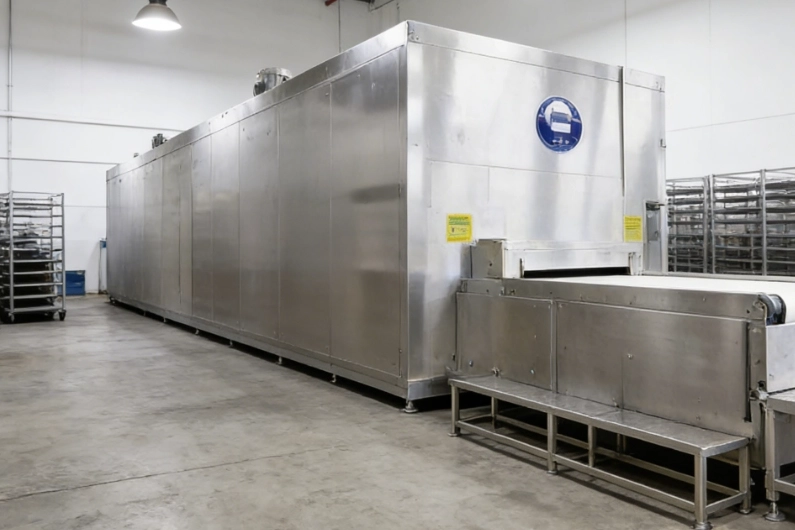
Comprehensive Analysis of Modern Natural Refrigerant Technologies
Before approving a large cooling project, grasp the changes in the worldwide market. Synthetic refrigerants face quick phase-outs. This pushes natural choices like ammonia (R717) and carbon dioxide (R744) as main options for lasting cold chain systems.
Comparative Study of Thermodynamic Efficiency and Environmental Impact
Ammonia stands out for efficiency, using less power to shift a ton of heat than most gases. Meanwhile, CO2 forms part of the air with a Global Warming Potential of one, setting the standard for sustainable work. Thus, it suits operations focused on low environmental harm.
Evolution of Safety Standards for Ammonia and Carbon Dioxide Systems
Traditional ammonia setups once seemed risky due to toxicity, but recent designs alter that view. Low-charge builds and secondary circuits isolate the gas from workers, whereas CO2 units manage high pressures with safety in mind. These advances enhance overall protection in facilities.
Global Regulatory Trends Favoring Low Global Warming Potential Solutions
Authorities restrict HFCs more each year. Shifting to natural refrigerants now serves as a practical step to avoid future fees and supply limits on chemical types. In this way, it supports long-term compliance and cost control.
Core Advantages of the Ammonia Synthesis Solution
In vast industrial uses, ammonia proves powerful. It excels in large areas such as chemical cooling or intensive food freezing. The Sintesis amonia method draws on the strong latent heat of this natural gas, forming a steady base for production growth.
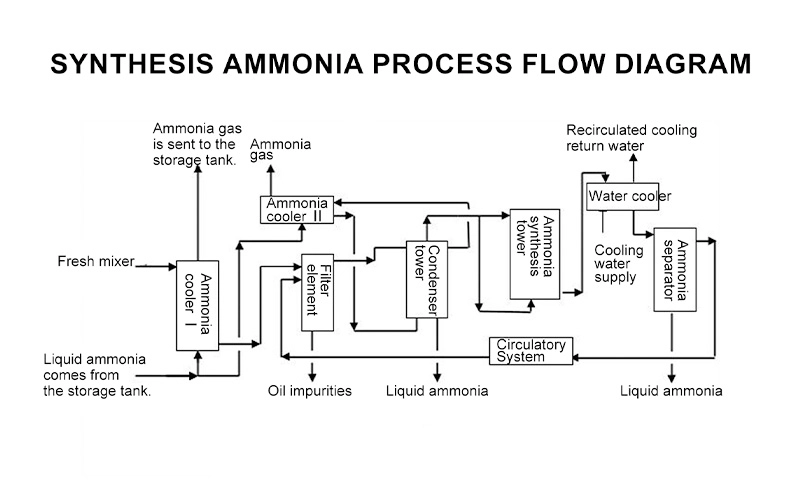
Industry Leading Thermal Performance for Large Scale Cooling Operations
Cooling a huge storage unit or reactor demands quick heat removal, and ammonia delivers that effectively. It permits narrower pipes than some alternatives, which cuts costs on materials like copper and steel during installation. As a result, it streamlines large projects.
Cost Effective Refrigerant Management for Long Term Project Budgets
Ammonia remains affordable as an industrial staple. Unlike chemical refrigerants, which carry high per-kilogram prices and market swings, ammonia stays steady. If a leak occurs, refilling proves economical, aiding budget planning over time.
Robust Equipment Design Suited for Severe Industrial Environments
Components in these systems endure for decades with proper care. Screw compressors and vessels often operate reliably after 20 years in harsh sites like chemical plants or seafood units. This durability supports continuous industrial demands.
Technical Superiority of the CO2 Refrigeration System Solution
CO2 returns as a key option in modern setups. It gains favor in staffed zones, such as meat processing or produce centers. A Solusi Sistem Pendinginan CO2 combines safety with strong pressure handling, aligning with current safety norms.
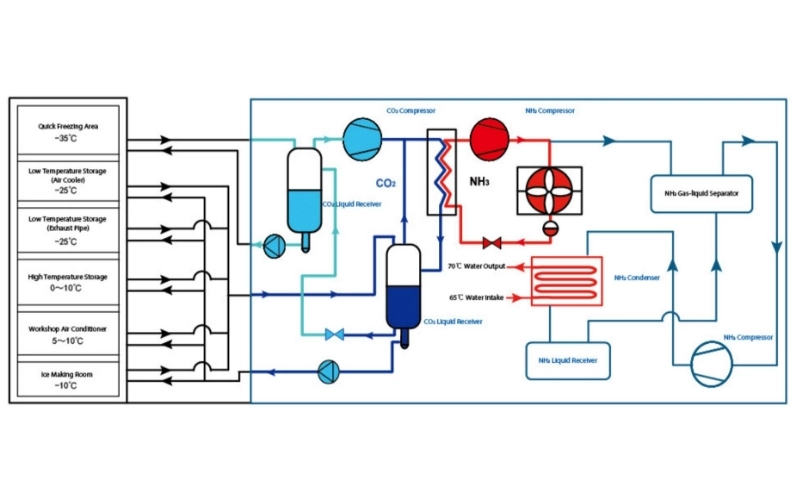
Exceptional Safety Profile for Public and Sensitive Work Areas
CO2 lacks toxicity and flammability, so it avoids strict barriers needed for ammonia. This allows greater placement options for equipment near staff zones. Consequently, it fits facilities with high people traffic.
High Volumetric Cooling Capacity for Compact System Footprints
CO2’s density enables strong cooling in limited space. Compressors and exchangers thus shrink compared to other gases, freeing up area for stock. This design optimizes site use in crowded operations.
Advanced Heat Recovery Potential for Improved Total Energy Utilization
CO2 releases valuable heat that systems can reclaim. Use it for hot water in cleaning or building warmth, turning byproduct into benefit. In effect, it boosts energy value from the same power input.
Integration Strategies for Ammonia and CO2 Cascade Systems
Wise choices often blend both refrigerants. Cascade setups employ ammonia in a sealed loop to chill a CO2 circuit, confining ammonia safely while CO2 reaches storage areas.
List of Efficiency Gains via Multi-stage Compression Design
Reduced Energy Consumption: By splitting the temperature lift between two gases, each compressor works in its “sweet spot.”
Lower Operating Pressures: The ammonia side stays at manageable pressures while the CO2 handles the deep freeze.
Better Part-load Performance: These systems are great at backing off when you aren’t at full capacity, saving you money during the night or off-seasons.
Risk Mitigation Through Secondary Loop Isolation and Smart Monitoring
Low ammonia levels in isolated sections nearly erase leak risks to products. Sensors and constant monitoring detect issues early, preventing failures. This setup ensures reliable operation with minimal downtime.
Optimized Operational Stability Across Wide Ambient Temperature Ranges
The ammonia/CO2 pair holds steady in varied climates, from humid tropics to arid zones. It outperforms single CO2 systems in high heat, maintaining consistent performance. Therefore, it suits diverse global sites.
Selection Matrix for Your Industrial Cold Chain Infrastructure
Right selection demands clear facts. Balance initial expenses with ongoing power and upkeep costs.
Comparison Table of Refrigerant Properties and Application Suitability
| Fitur | Ammonia (R717) | Carbon Dioxide (R744) | Cascade (NH3/CO2) |
|---|---|---|---|
| Efficiency | Excellent | Good (High in cold climates) | Superior for Low Temp |
| Toxicity | High (Requires safety gear) | Low / None | Very Low (In work areas) |
| Pressure | Low to Moderate | Sangat Tinggi | Balanced |
| Ideal Use | Large Industrial / Chemicals | Supermarkets / Food Prep | Large Scale Cold Storage |
Impact of Local Infrastructure on Maintenance and Spare Parts Access
Repair access matters greatly. In isolated locations, select systems with common parts and remote diagnostics for smooth upkeep. This approach reduces disruption from failures.
Long Term ROI Analysis of Natural vs Synthetic Cooling Methods
Natural systems may cost more upfront, but they skip refrigerant fees and cut energy use, recovering investment quickly. You also avoid bans on synthetics by 2030, securing future viability.
Secure Your Future with MOON-TECH Cold Chain Solutions
Ultimately, ensure your stock stays safe from spoilage. Teaming with a firm holding 70 years of record and over 70 national standards brings assurance.
Access to World Class Engineering and Full Life Cycle Services
Support spans from planning to later renewals, offering full care. It covers setup, startup, and operator training, so your staff handles systems well.
Global Network for Rapid Installation and Technical Consultation
Outlets in over 40 countries provide more than equipment; they deliver worldwide aid. From large seafood storage to modest ice facilities, help arrives promptly.
Contact the Expert Team at MOON-TECH for Custom Cooling Plans
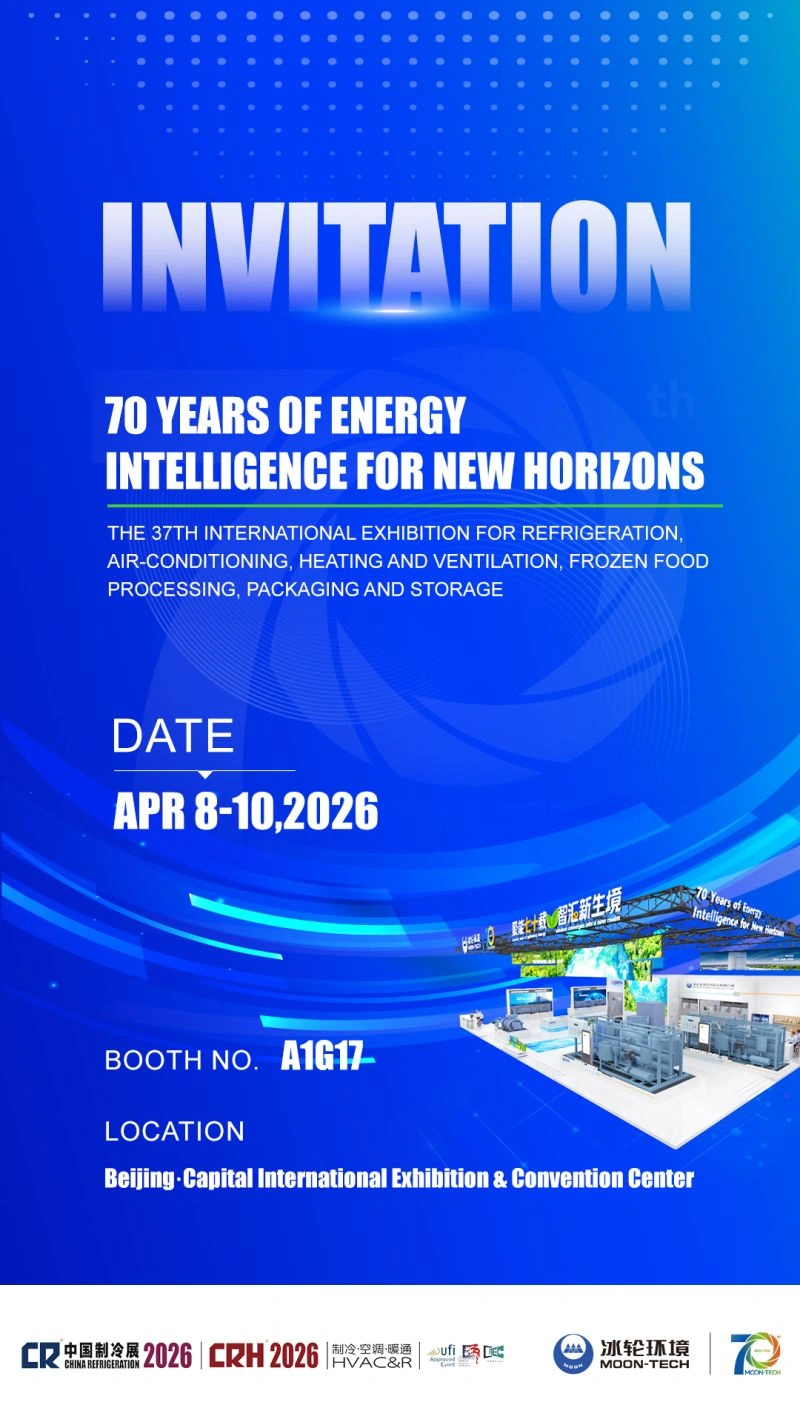
Sites vary in needs, which is why opting for BIM-optimized designs is essential to prevent pipe issues and maximize output. To explore these tailored natural refrigeration solutions in person, join MOON-TECH at CRH 2026 (Booth A1G17) from April 8–10 at the Beijing Capital International Exhibition & Convention Center. As we celebrate 70 years of innovation, our team will be on-site to showcase our latest advancements in sustainable cold chain technology and discuss how we can drive energy intelligence for your specific global operations.
FAQ (Pertanyaan umum)
Q1: Is ammonia safe to use in food processing facilities?
A: Yes, it is very safe when used in a cascade system where the ammonia is confined to the machine room and a safer medium like CO2 is used to cool the actual processing areas.
Q2: Why is CO2 becoming so popular for refrigeration?
A: CO2 is non-toxic, non-flammable, and has a very low environmental impact. It also allows for very compact equipment and excellent heat recovery for hot water needs.
Q3: How long does an industrial screw compressor system usually last?
A: With proper maintenance and the high-quality castings used in modern units, these systems often serve for 20 to 30 years or even longer.
Q4: Do these systems work well in hot climates?
A: Ammonia systems are exceptionally stable in high ambient temperatures. For CO2, a cascade or sub-cooling design is typically used to maintain high efficiency even in the heat.
Q5: What kind of support is available after installation?
A: You get a 7x24h service guarantee including system diagnosis, remote monitoring, technical training for your operators, and a full supply of genuine spare parts.