
When energy costs now represent up to 70% of total ownership expenses in industrial cooling, choosing the right low-temperature solution is no longer just a technical decision, it directly impacts your profitability for years to come. For decades, screw brine chillers with secondary coolants like ethylene glycol or calcium chloride have been the reliable standard. Today, a new generation of CO2 transcritical phase-change units is challenging that position with dramatically lower operating costs and zero corrosion risk. This comparison focuses on real five-year energy trends so you can see exactly where the savings appear and how quickly the numbers work in your favor.
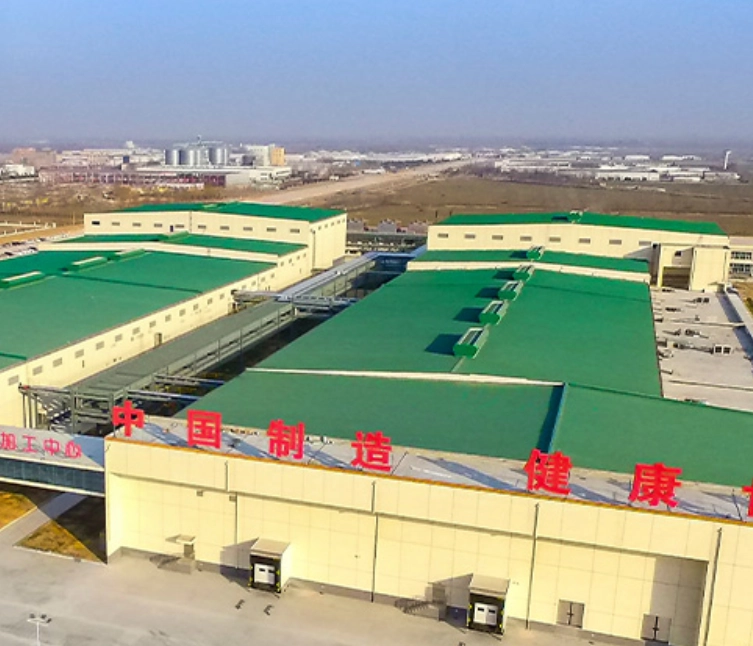
Since 1956, MOON-TECH has delivered both traditional and cutting-edge refrigeration solutions to over 120 countries. With multiple national patents, global manufacturing bases, and a complete service network, they are one of the few companies that truly master both technologies you are evaluating today.
What Makes a Trusted Partner in Low-Temperature Cooling?
You need a supplier that has proven it can deliver either technology flawlessly for decades. Only a partner with genuine depth in both brine and natural-refrigerant systems can give you unbiased, experience-based advice.
Decades of Innovation and Global Reach
Founded in 1956 and publicly listed since 1998, MOON-TECH operates nine R&D and manufacturing bases worldwide, holds over 260 national patents, and has received both the National Science and Technology Progress Award and the National Technological Invention Award. Their CO2 refrigeration technology is recognized by the United Nations as a global demonstration project for replacing HCFC-22.
Tailored Solutions for Industrial Cooling Challenges
From minus 5 °C brine systems to minus 50 °C CO2 direct-expansion units, they design, manufacture, and integrate complete solutions for chemical process cooling, food freezing, and aggregate temperature control, all meeting API 619, ASME, CE, and explosion-proof standards.
Proven Case Studies and Comprehensive Services
Thousands of installations worldwide are supported by 24/7 localized service teams, predictive maintenance platforms, and spare-parts warehouses in over 40 countries, ensuring maximum uptime no matter which system you choose.
What Defines the CO2 Transcritical Phase-Change Unit?
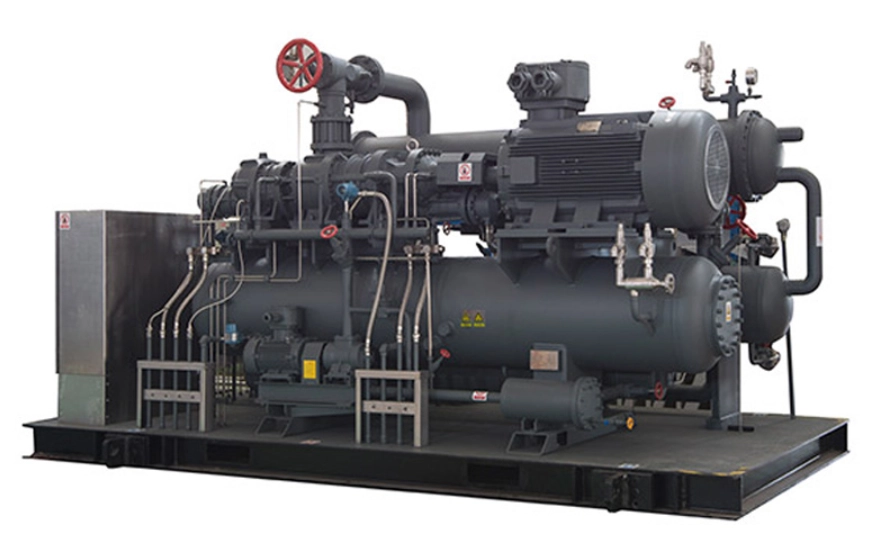
Modern CO2 transcritical units eliminate secondary coolants completely. The GEPT-R290 CO2 High Efficiency Phase Change Refrigerating Unit uses natural refrigerants R290 and R744 in a cascade arrangement with falling-film evaporation. Direct expansion of CO2 as the low-temperature carrier delivers outlet temperatures down to minus 40 °C or lower without brine loops, pumps, or intermediate heat exchangers. The result is a simpler piping layout, no risk of corrosion, and significantly lower pump power consumption throughout the year.
Cutting-Edge R290-CO2 Phase Change Technology
This unit leverages eco-friendly R290 and R744 refrigerants with falling-film evaporation for high COP values, achieving temperatures down to minus 40 °C without secondary fluids. Recent 2025 studies confirm transcritical CO2 cycles now offer up to four times the efficiency of traditional methods in high-ambient conditions, thanks to optimizations like ejector expansion and parallel compression.
Explosion-Proof Design for Safe Industrial Use
Compliant with API 619 standards, sealed compressors and enhanced safety features make it ideal for hazardous environments, fully eliminating brine-related corrosion risks that plague legacy systems.
Versatile Applications in Process Cooling
Perfect for replacing traditional chillers in chemical and food industries, it supports direct cooling with minimal pump power. Global deployments show seamless integration, reducing overall system complexity by 25% compared to brine setups.
How Does the Traditional Screw Brine Chiller Perform in Daily Operation?
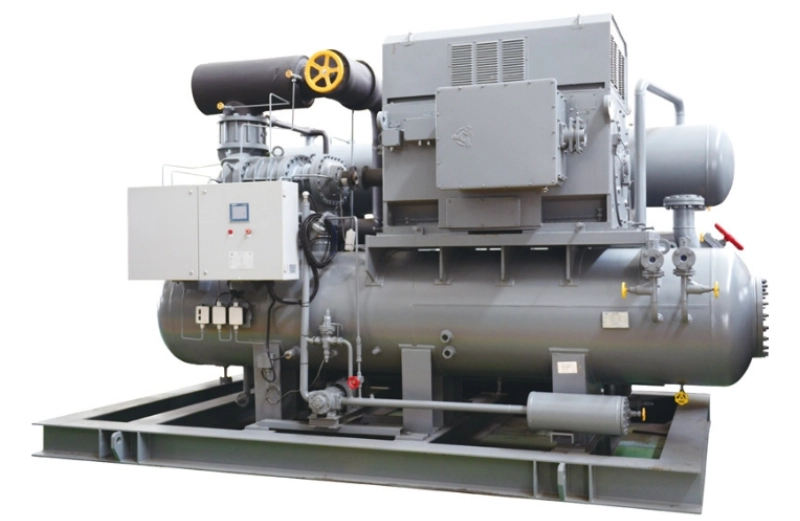
Screw brine chillers remain a solid choice where budget or existing infrastructure limits options. Units such as the Flooded Low-Temperature Brine Chiller and Siphon-Type Low-Temperature Brine Chiller deliver brine temperatures from minus 5 °C to minus 35 °C using efficient screw compressors and proven flooded or siphon evaporators. Capacity control from 15 % to 100 % provides flexibility for varying loads, while oil recovery systems keep performance stable over long periods.
Reliable Flooded and Siphon-Type Configurations
These YS-series units use R134a or R507 refrigerants with LG screw compressors for capacities up to 704 kW, ensuring stable output in demanding low-temperature scenarios down to minus 35 °C.
Secondary Coolant Systems for Broad Compatibility
Ethylene glycol or calcium chloride solutions enable reliable heat transfer across extensive networks, making them compatible with legacy piping while supporting variable process demands.
Established Efficiency in Legacy Installations
With low-vibration operation and 15-100% capacity modulation, they deliver consistent performance in existing setups, though secondary exchange introduces a 10-15% efficiency penalty from added thermal resistance.
Which System Shows Better Energy Numbers in the First Two Years?
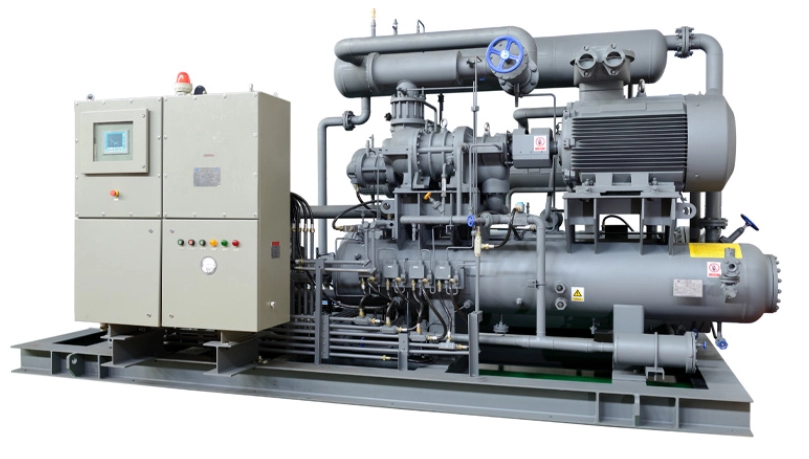
Superior coefficient of performance stands out immediately with CO2 transcritical units. Real operating data shows 30 % to 50 % higher COP compared to brine systems at minus 30 °C conditions, mainly because circulation pumps consume far less power when no secondary coolant is required. Direct expansion also avoids temperature penalties from intermediate heat exchange, so compressors work against a lower lift.
Superior COP and Reduced Pump Consumption in CO2 Units
CO2 systems achieve 30-50% higher COP in early trials versus brine chillers, slashing circulation losses and eliminating secondary agent costs for immediate operational gains.
Immediate Gains from Natural Cold Utilization
Ambient cooling integration recovers free energy, cutting initial kWh by 20% in cold climates, a feature absent in brine systems reliant on constant pumping.
Quantifiable ROI in First 12-24 Months
Payback under two years is common, driven by low GWP compliance and streamlined integration that avoids brine maintenance from the start.
What Energy Trends Emerge Over the Full Five-Year Period?
Corrosion and degradation hit brine systems hardest after year three. Secondary coolant quality declines, requiring expensive replacement and causing gradual efficiency loss. Pipeline repairs, valve replacements, and heat-exchanger cleaning add unplanned costs that compound yearly. CO2 units avoid these issues entirely, maintaining design efficiency throughout the period.
Escalating Savings from Maintenance and Corrosion Avoidance
By year three, CO2 avoids over $50,000 in brine repairs, leading to 40% total energy reductions over five years in simulated industrial loads.
Impact of Regulatory Changes on Brine System Costs
HFC phase-downs raise brine operating costs 15-25% by 2028, while CO2 remains penalty-free, stabilizing long-term expenses.
Long-Term Data from Global Installations
Field data shows CO2 retaining 95% efficiency at year five, versus 10-15% brine loss from fouling, yielding 2.5 times better lifecycle metrics.
Which Technology Best Positions You for Future Requirements?
Scalability favors modular CO2 designs. Adding capacity later simply means installing another skid rather than extending corrosive brine pipelines across the plant. Integration with heat recovery or energy storage becomes straightforward when no secondary loop exists.
Seamless Scalability for Expanding Operations
Modular CO2 skids allow easy expansion without brine infrastructure overhauls, aligning with 2025 trends toward flexible, low-GWP systems.
Enhanced Sustainability Metrics for ESG Reporting
CO2 cuts footprints by 60% over five years, meeting tightening ESG demands without offsets, unlike high-GWP brine alternatives.
Customized Support for Optimal Implementation
From audits to remote monitoring, end-to-end services ensure 99% uptime, making CO2 the resilient choice for evolving industrial needs.
Why Choose CO2 Transcritical Technology for Your Next Project?
Five-year energy leadership belongs clearly to CO2 transcritical phase-change systems. They deliver lower electricity bills from month one, eliminate corrosion headaches forever, and protect you against rising regulatory costs. While traditional screw brine chillers still make sense for simple like-for-like replacements, new plants and major upgrades benefit dramatically from the cleaner, more efficient CO2 approach.
Take the next step toward cutting your cooling costs permanently. Contact MOON-TECH that has mastered both technologies and let them run a customized five-year energy analysis for your specific load profile.
FAQ
Q1: Will a CO2 transcritical unit really save money if my plant already has brine piping?
A: Yes. Most savings come from eliminating pump power and maintenance rather than refrigerant cost alone. Payback typically stays under three years even when keeping some existing piping for other services.
Q2: Is CO2 technology safe for low-temperature applications?
A: Absolutely. Modern designs operate at pressures well within certified limits and include multiple safety layers. Natural refrigerants also remove toxicity risks associated with ammonia in certain areas.
Q3: How much extra does the more efficient system cost upfront?
A: Initial investment runs 30 % to 80 % higher depending on size, but rising energy prices and zero corrosion expenses usually recover the difference within two to four years.
Q4: Can I achieve temperatures below minus 40 °C if needed?
A: CO2 transcritical cascade systems routinely reach minus 50 °C and lower in standard configurations, covering virtually all industrial low-temperature requirements.