
Shifting to natural refrigerants now serves as a key necessity for industrial cooling, beyond mere environmental selection. As worldwide rules grow stricter, transcritical CO2 systems stand out as a leading option for lasting sustainability. Yet, the performance drop in hot areas—the “CO2 Equator” issue—poses a main worry for plant operators. Facilities integrate adiabatic cooling and improved compression methods to keep strong output despite outside heat levels. To manage this shift, partners with solid background prove valuable. Spanning 70 years from 1956, MOON-TECH acts as a varied, globally noted leader in cryogenic refrigeration and energy tools. As a model firm for ozone protection, this service-driven supplier offers full support from plan setup to smart upkeep, so cooling setups stay ready for future industrial needs.
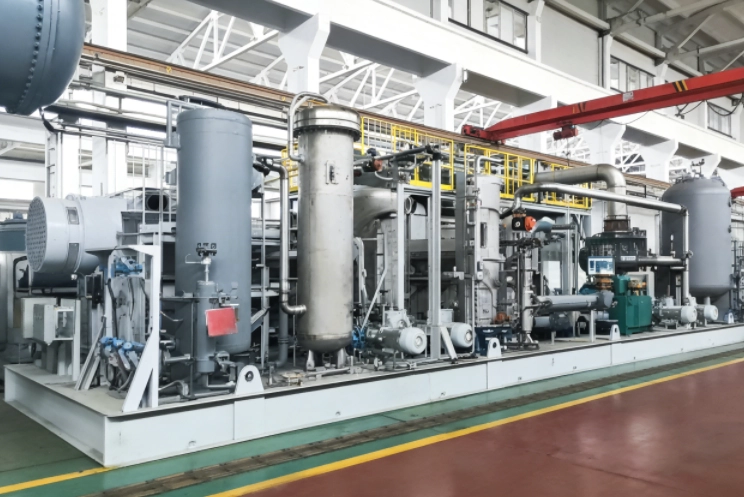
Transcritical CO2 Efficiency in Warm Climates
Handling industrial refrigeration in spots with high outside temperatures calls for a clear grasp of heat limits. Systems using R-744 show clear changes in output as air warmth nears the refrigerant’s key point. This area and heat line decides if the setup works in an effective subcritical way or a higher-energy transcritical way.
Definition of the CO2 equator challenge
The CO2 equator marks the areas where outside temperatures often top 31 degrees Celsius, forcing CO2 into a supercritical form where standard heat removal fails to condense it. This condition raises energy use and cuts cooling power in tropical zones. As a result, plants face higher running costs without added fixes.
Role of adiabatic cooling in temperature mitigation
Adiabatic cooling employs water evaporation to chill incoming air before it hits the gas cooler, making the system act like it sits in a cooler spot. This process drops effective air warmth by several degrees, which helps keep CO2 in a workable state. Therefore, overall efficiency rises in steady operations.
Integration of MOON-TECH advanced natural refrigerant solutions
Facilities adopt an integrated CO2 Refrigeration System Solution, drawing on 70 years of design know-how to close the output gap in warm industrial uses. This approach blends hardware and controls for reliable results across climates. In practice, it supports smooth shifts in varied settings.
Thermodynamics of the CO2 Equator and Efficiency Barriers
Grasping the science of the CO2 equator aids in cutting a plant’s energy needs. As outside warmth climbs, system pressure rises to release heat, adding strain to compression parts. This change explains why basic CO2 setups often falter in hotter places.
Impact of low critical points on COP
CO2’s low critical warmth means that in heat, the Coefficient of Performance falls since the system labors more to shed heat without phase-shift gains from condensing. This leads to extra power draw during peak times. Consequently, yearly costs increase without cooling aids.
Performance degradation during transcritical operation phases
In transcritical runs, the gas cooler output stays warm, which boosts flash gas and cuts the net cooling for processes. This setup demands more work from compressors, raising wear. As such, plants see lower uptime in warm seasons.
Regional limitations for standard R-744 system adoption
Lacking special boost tools, usual R-744 systems incur steeper costs in areas like Southeast Asia or the Middle East versus old synthetic options. Heat strains push higher energy use year-round. Thus, adoption slows without local tweaks.
Mechanisms of Adiabatic Pre-cooling for Peak Performance
Adiabatic cooling serves as a strong heat shield for refrigeration plants. Adding this method cuts air entry temperature to the gas cooler by 10 to 15 degrees Celsius, often keeping CO2 near subcritical levels most of the year. This shift boosts steady output in tough conditions.
Evaporative cooling effect on ambient air intake
Water-wet pads or mist sprays pull heat from entering air, offering a chill that guards against summer highs. This process works without added power, which fits industrial budgets. In effect, it steadies system loads over time.
Shift from transcritical to subcritical operating modes
Dropping air warmth lets CO2 change phases to liquid, a more steady and effective mode for ongoing cooling tasks. This avoids high-pressure runs that drain energy. Therefore, plants gain better control and lower stress.
Reduction of compressor discharge pressure and thermal load
Keeping gas cooler warmth down lowers the needed output pressure for the CO2 Compressor, which lengthens part life and trims power use. This eases daily operations in heat. As a whole, it cuts long-term expenses.
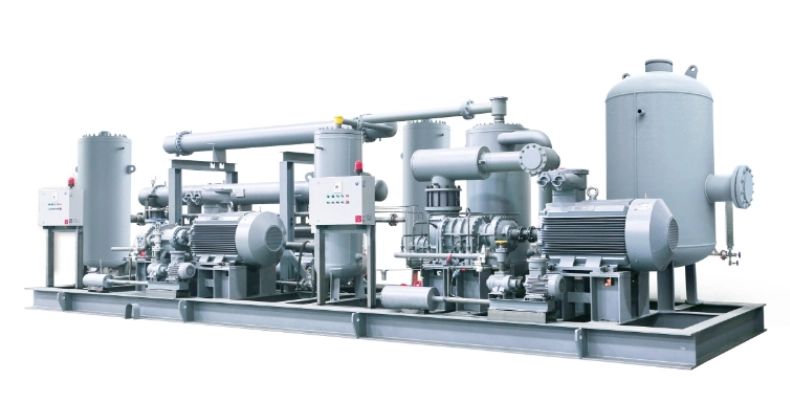
MOON-TECH Strategic Hardware for High-Ambient Environments
Picking suitable parts marks the top way to beat the CO2 equator issue. Current industrial gear targets the high pressures and changing loads of natural refrigerants in mixed climates. These designs mix tough builds with smart heat handling for sure reliability.
GEPT-R290 CO2 high efficiency phase change unit
The GEPT-R290 CO2 High Efficiency Phase Change Refrigerating Unit offers a strong fix by pairing propane as a top-stage refrigerant, so CO2 holds steady despite outer warmth. This combo fits large plants well. It ensures even cooling in varied heat.
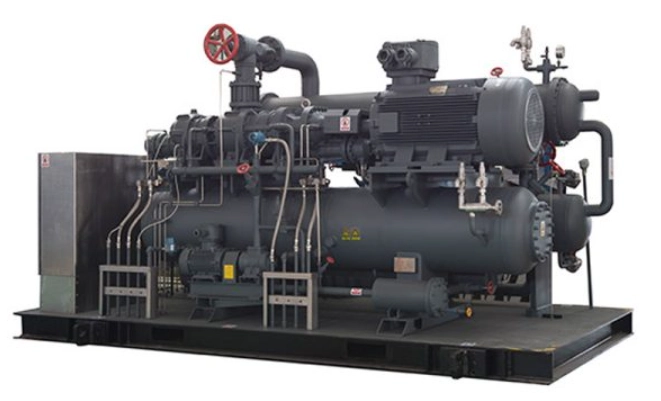
Robust semi-hermetic screw refrigeration compressor performance
A Semi-Hermetic Screw Refrigeration Compressor Unit manages high flow and pressure gaps needed for big freezing jobs. Its sealed design cuts leaks and boosts uptime, thus, it supports heavy daily runs.
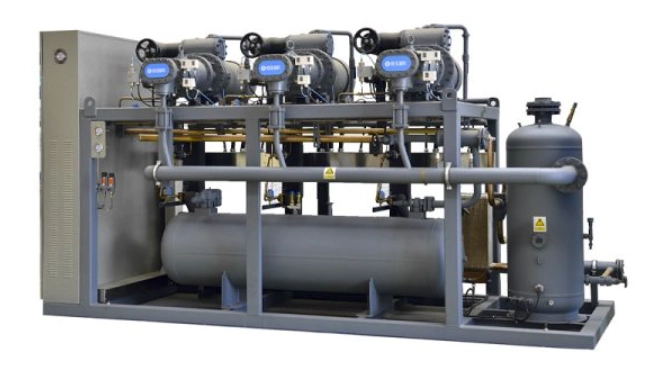
Specialized CO2 compressor units for high-pressure durability
New compressors use better seals and materials to face R-744’s lubrication and pressure tests, giving round-the-clock safety for cold chains. This build handles cycles without fail. In turn, plants avoid breakdowns.
System Optimization Strategies Beyond Surface Cooling
Adiabatic cooling forms the main guard against the CO2 equator, but inner tweaks add needed backing for top output. Mixing outer air chill with gas flow control creates a full energy-cut plan. This layered method sets apart basic setups from strong industrial ones.
Implementation of parallel compression for flash gas
Parallel compression handles flash gas from high warmth more smoothly, easing the main intake group’s load and saving power. It fits into existing lines with little change. As a result, efficiency climbs in heat.
Use of high-efficiency ejectors for energy recovery
Ejectors tap high-pressure CO2’s expansion to raise suction gas pressure, serving as a no-cost lift that boosts hot-weather output. This tool recovers lost energy well. Therefore, systems run leaner overall.
Intelligent control logic within MOON-TECH system solutions
Smart controls track outside conditions live, turning on adiabatic parts and tuning compression as needed to hit the best run point always. This automation cuts human error. In practice, it keeps peaks steady.
Competitive Advantages of MOON-TECH Industrial Cooling
Over seven decades of progress, the know-how of MOON-TECH for projects exceeds basic gear delivery. The aim centers on full, tuned lifecycles for refrigeration assets. From huge cascade setups to exact screw units, the skill depth shields against rule changes and energy rises.
Decades of expertise in large-scale CO2 applications
Pioneering CO2 tech for over 70 years, teams have placed nearly a thousand big projects in fields like food handling and chemicals. This record covers wide uses. It brings proven fixes to new sites.
Customized EPC solutions for global industrial clients
Full plans include site work, BIM-based design, and field setup, so pipes and high-pressure parts join safely and soundly. This covers all steps. Plants get matched results fast.
Comprehensive after-sales service and technical lifecycle support
A worldwide net offers 24/7 smart aid, from advice and upgrades to upkeep that holds peak output for years. This covers remote spots well. Thus, downtime stays low.
FAQ
Q1: What exactly is the CO2 Equator problem?
A: It is the efficiency loss that CO2 refrigeration systems experience in warm climates when ambient temperatures exceed 31.1°C, preventing the refrigerant from condensing normally.
Q2: How does adiabatic cooling improve CO2 system efficiency?
A: It uses water evaporation to lower the temperature of the air entering the gas cooler, allowing the system to operate in a more efficient subcritical state even during hot summer days.
Q3: Is CO2 a safe refrigerant for industrial use?
A: Yes, CO2 is an A1-rated refrigerant, meaning it is non-flammable and non-toxic, making it a much safer alternative to ammonia in many urban or high-density industrial settings.
Q4: Can these systems be used for both freezing and heating?
A: Absolutely, one of the biggest advantages of CO2 systems is their excellent heat recovery potential, allowing you to use waste heat for industrial water heating or space heating.