
The controller can say Ready while the oil side is still telling a different story. Before touching Start, I normally put four readings side by side: oil temperature, oil pressure, discharge pressure and the last alarm record. A single green value is not much comfort. Cold oil after a winter stop is one situation; a dirty filter or weak pressure during pre-lubrication is another, and the response is not the same.
This check is especially useful after seasonal shutdowns, oil service, filter replacement or work on the oil cooler. It is not a substitute for the manufacturer’s operating manual. It is a practical way to decide whether the readings make sense before the rotor starts turning at full speed.
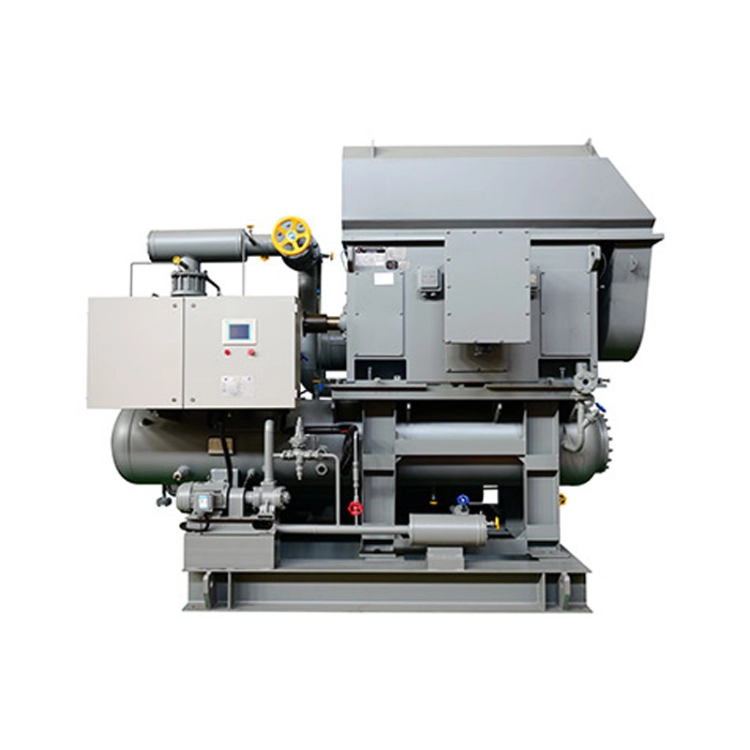
MOON-TECH supplies several configurations under its وحدة ضاغط التبريد المسمار range. The oil path and control logic vary by model, so the correct limits must always come from the selected unit’s manual and commissioning sheet.
Start With the Oil Circuit, Not a Single Gauge
Oil is doing several jobs inside the machine. Bearings need it, the rotor area uses it for sealing, and heat leaves with it. So I do not treat the oil circuit as an accessory bolted to the skid. The flow has to be clean and the temperature and pressure have to make sense together. A marginal circuit often survives the first idle minutes, then complains as soon as the slide valve moves.
Read the circuit in order: oil separator or receiver, oil cooler, oil filter, oil pump where fitted, regulating components and the injection or bearing points. Then compare the local gauges with the controller. A large difference between them may be an instrument problem. Matching readings that are outside the approved range point back to the process or oil circuit.
What Oil Temperature Tells You Before Start-Up
Cold oil feels heavy to the circuit. It takes more effort to push it through a filter and the smaller passages. At the other end, hot oil becomes thinner and the film at bearings and sealing points may no longer be what the designer expected. Either condition may still show a pressure value on screen. No alarm is not the same thing as a good start condition.
The published MOON-TECH range for the relevant open-type units is commonly 30–65°C. I would write that number on the checklist, but I would not use it as a blanket permission to start every unit. Refrigerant, oil grade, ambient temperature and the standstill-heating rule still come from the model manual. After a long stop, give the heater its required time and check the possibility of refrigerant dilution instead of trusting the temperature alone.
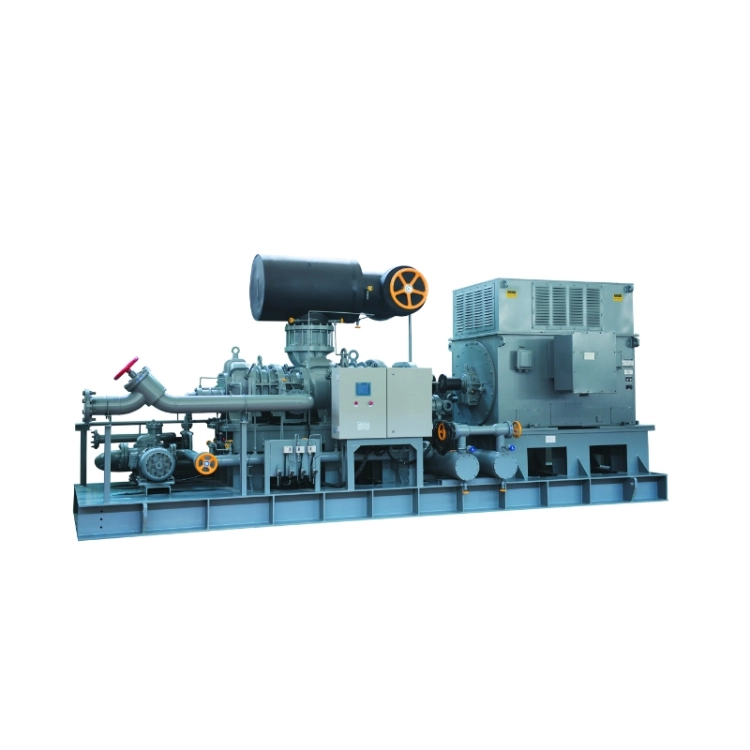
For the وحدة ضاغط التبريد المفتوحة ذات المرحلة الواحدة, the package includes oil separation and a dedicated oil system. The startup review should use the actual single-stage data sheet rather than limits copied from a different compressor series.
A Useful Temperature Check
The trend is usually more helpful than the latest scan. After the heater came on, did the temperature climb in a believable way? Does the tank feel broadly consistent with the display? If the value jumped just after transmitter work, I would check the instrument before blaming the oil. A tidy number with no sensible history is not strong evidence.
The other half of this check sits across the oil cooler. On some jobs, a water valve left wide open keeps a cold machine cold for too long. Shut or restricted flow produces the opposite problem once load comes in. I check the actual valve arrangement because the correct starting position is a package detail, not a rule that can be copied from the neighboring skid.
Oil Differential Pressure Is the Working Signal
Oil pressure by itself is easy to misread. What matters to the injection and lubrication points is the pressure available above the pressure they are working against. In many screw packages, operators therefore watch oil pressure relative to compressor discharge pressure. That difference is the useful driving force through the oil path.
Published MOON-TECH information for single-stage units commonly describes oil pressure as about 0.1–0.3 MPa above discharge pressure. Compound two-stage literature can list about 0.05–0.3 MPa above discharge pressure. These ranges belong to the stated product arrangements. Do not apply the lower limit from one model to another simply because both machines have screw rotors.
The oil-pressure basis for an مفتوح النوع مركب مرحلتين المسمار وحدة ضاغط التبريد should be checked against that unit’s own control and oil-system documents. Its pressure relationships are not identical to a single-stage package.
What Low Differential Pressure Can Mean
A low difference does not point straight to a failed pump. I first check oil level, temperature, filter condition and the regulating-valve position. The pump may indeed be weak, but replacing it before those ordinary checks is an expensive guess.
The way the readings move usually narrows the search. A rising filter drop paired with falling differential puts the filter high on my list. A hot-oil trend sends me toward viscosity and cooler performance. If the controller jumps but the local gauges barely move, I would look at the transmitter, its impulse line and scaling. The alarm name by itself cannot make that distinction.
What High Differential Pressure Can Mean
More pressure difference is not automatically good news. Thick cold oil can raise it, as can a restriction downstream, a regulator set badly or a false signal. Where the skid provides the points, I note pump discharge plus filter inlet and outlet. Those three readings are more useful than turning a setpoint and hoping.
Check the Oil Cooler and Cooling Water
Cooling water sometimes gets one short line on a utility sheet, even though the oil temperature depends on it. MOON-TECH gives approximate oil-cooler flows of 10 m³/h for LG12M, 15 m³/h for LG16M, and 25 m³/h for LG20M and LG25M. The numbers make a simple point: one convenient small branch line cannot be assumed to serve every compressor size.
On site I would record water inlet temperature and flow, then look at valve position, the strainer and the pressure available across the circuit. The product material also points to GB50050, Design Code on Industrial Circulating Cooling Water Processing. Scale quietly cuts heat transfer; loose debris quietly cuts flow. Both can stay invisible until the unit is asked to carry real load.
A Five-Minute Pre-Start Reading Sequence
For a shift team, five repeatable minutes are worth more than a long form pulled out only after a trip. We use the same order each time so yesterday’s readings can be compared with today’s.
- Confirm the correct oil grade, visible oil level and absence of active leaks after maintenance.
- Read oil temperature locally and on the controller; compare both with the recent trend and the model’s approved range.
- Run or confirm pre-lubrication where the package design provides it, then note oil pressure, discharge pressure and the resulting differential.
- Compare pressure before and after the oil filter if both points are available. Record the value instead of writing only ‘normal.’
- Check oil-cooler water or refrigerant-side valves, strainer condition, inlet temperature and expected flow path.
- Review the last alarms and maintenance entry. A cleared low-oil-pressure alarm still belongs in the decision.
- Start only when the readings agree with the unit manual and the cause of any unusual trend is understood.
Watch the First Minutes Under Load
The start button is not the end of the check. Watch how quickly differential pressure establishes, whether oil temperature moves smoothly and how the filter pressure drop behaves as capacity comes in. The MOON-TECH LG Series uses automatic stepless capacity control, with remote or local and manual or automatic switching depending on the package. That means the oil circuit should be observed through the first real load change, not only at idle.
The PLC history helps, but I still note the timing: oil pump on, compressor on, differential settled, slide valve moved, oil temperature started to climb. Repeat that small record after service and a slow change becomes visible long before anybody remembers it as a recurring fault.
For broader load and expansion questions, MOON-TECH’s article on optimizing an industrial refrigeration screw unit for partial load and factory expansion covers a different part of the operating discussion. Oil readiness still needs its own pre-start check.
What to Send the Supplier When the Reading Looks Wrong
An email that says only ‘oil pressure low’ starts another round of questions. I send the model and serial number first, followed by refrigerant, oil grade, temperatures, suction and discharge pressure, filter drop, oil level, cooler-water inlet and the alarm time. It also matters whether the reading appeared before start, in the first seconds, or when the slide valve began to load.
Photos of local gauges and a controller trend are useful, especially if they were taken at the same time. Mention recent work on filters, pumps, coolers, valves or transmitters. This information lets the supplier separate an instrument issue from a real loss of oil flow without guessing across several time zones.
استنتاج
I would not sign off a start from either temperature or pressure alone. Temperature tells me what kind of oil the circuit is trying to move at that moment; the differential tells me whether it has useful driving force. Discharge pressure, filter drop, cooler condition and the alarm history complete the picture. Final limits stay with the model manual. A value borrowed from another screw package is only a clue until it is checked.
أسئلة متكررة
Q1: What oil temperature is listed for MOON-TECH screw refrigeration compressor units?
Relevant MOON-TECH product information commonly lists 30–65°C. The approved start and operating condition must still be confirmed in the manual for the exact model, refrigerant and oil grade.
Q2: Why compare oil pressure with discharge pressure?
The difference shows the pressure available to drive oil through the lubrication and injection path against the compressor’s working pressure. An isolated oil-pressure value can look acceptable while the usable differential is too small.
Q3: Does low oil differential pressure always mean the oil pump is damaged?
No. Cold oil, a restricted filter, low oil level, regulator position, transmitter error or a flow problem can produce a similar reading. Check the pressure pattern through the circuit before assigning the cause.
Q4: Why check the oil cooler before the compressor is loaded?
A wrong valve position, poor cooling-water flow, fouling or a blocked strainer may not be obvious at low load. The oil temperature can then rise quickly when capacity increases.
Q5: What data should be recorded after a low-oil-pressure alarm?
Record the model, refrigerant, oil grade, oil temperature, oil pressure, suction and discharge pressure, filter pressure drop, oil level, cooler conditions, capacity position and the exact timing of the alarm.