
What leaves a capture unit is still a gas stream. It carries the capture process’s pressure, temperature, moisture and leftover components with it. The receiving side may ask for something quite different. Compression and liquefaction make that handover possible. If the handover condition is left blank, it comes back later as a string of interface questions.
With more CCS projects moving into equipment procurement, CO2 compressor work is showing up earlier in basic engineering. It needs to. A capture package can be ready while the CO2 handling section is still arguing about refrigeration duty, buffer capacity or the loading route. Buying one compressor does not close those gaps; following the whole gas path does.
MOON-TECH presents gas treatment as an integrated route covering compression, cooling, liquefaction, storage and transportation on its Solusi Pengembangan Lapangan Minyak & Gas page. The same boundary thinking applies when the gas being handled is CO2.
Captured CO2 Is Only Halfway There
A flow figure by itself tells the compressor vendor very little. Add water, oxygen, nitrogen and whatever traces can cross the upstream boundary. Suction pressure needs a range as well. The same mass flow can mean two quite different machines when one stream arrives close to atmospheric pressure and another is already pressurized.
The target state also has to be written down. Is the CO2 leaving the battery limit as compressed gas, as liquid for storage and loading, or at an intermediate condition for another process package? A vague note saying ‘ready for transport’ is not enough. The receiving pressure, temperature, phase and allowable composition should be agreed before the compressor stages are fixed.
Define the Gas Before Selecting the CO2 Compressor
For an RFQ, give the normal composition and the expected range, not just one clean design case. Include minimum, normal and maximum flow. Show suction pressure and temperature for start-up, normal production and upset recovery. Water content and any chance of liquid carryover need a direct answer. This is ordinary project work, but it prevents most of the wrong assumptions that appear later.
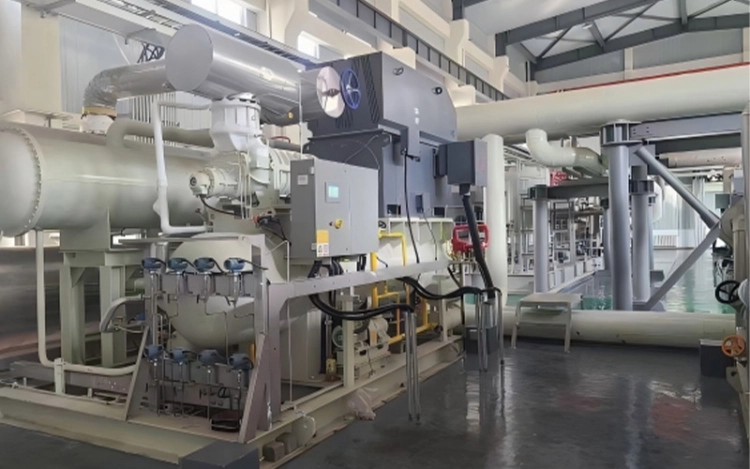
The MOON-TECH Screw CO2 Compressor Unit is used for CO2 recovery and pressurization in petroleum, petrochemical, natural gas, coal, chemical, synthetic ammonia, power, steel and food fermentation applications. The product information also notes use in multiple CCUS projects. That is a useful application base, while the actual selection still starts with the gas data from the site.
The listed working range includes suction pressure of 0.04 to 2.0 MPa(a), exhaust pressure up to 5.2 MPa(a), with single-stage and dual-stage arrangements. Those figures describe the product information range. They should not be read as a promise that every gas composition and every operating point will use the whole range.
Compression, Cooling and Liquefaction Belong in One Review
Stage Arrangement and Interstage Conditions
A hotter discharge comes with the pressure rise. Split the duty into stages and the review becomes very practical: cooling between stages, liquid removal, allowed pressure drop and the next-stage inlet temperature. These numbers should work at steady load and while production is changing, not only at the rated point.
Oil Management and Gas Cleanliness
Draw the oil-system boundary where everyone can see it. The RFQ should name the required gas cleanliness after compression and the party responsible for any final polishing. Put drains, oil circulation before start-up and the related alarms on that sheet too. These details look small in a pressure discussion. They aren’t small during commissioning.
Pressure and Refrigeration Have to Match
MOON-TECH places compression ahead of the liquid CO2 step, with refrigeration providing the cooling. For the project team, that means one common design case must feed both packages. Flow, discharge pressure and temperature should match on the compressor and refrigeration data sheets.
Storage and Dispatch Need Their Own Operating Case
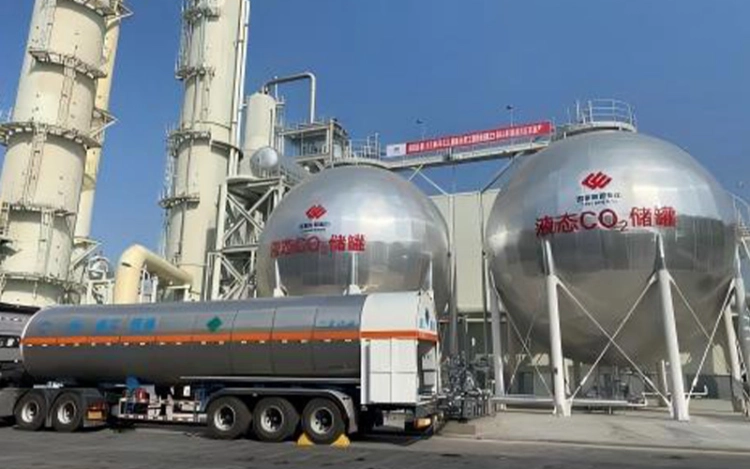
Once the CO2 is liquid, somebody has to store it and move it out. A truck schedule, ship loading, a pipeline and steady on-site use all pull from storage differently. That choice sets the pressure basis and the buffer volume that is actually usable. A tank can smooth a short upset. It cannot hide a permanent mismatch between capture, liquefaction and dispatch.
The client material names enhanced oil recovery, chemical synthesis, shielding gas, refrigerants, dry ice, food additives, agricultural fertilizers and geological sequestration. Those are very different destinations. There is no reason to assume that one CO2 grade suits every one of them; the chosen outlet sets the quality and regulatory limits.
RFQ Details That Save Time Later
The first RFQ issue can be short. It should still settle the handoffs, so include the following before asking vendors to size a package:
- Begin with the CO2 source, full composition, water content and anything else the capture section may carry over.
- Show minimum, normal and maximum mass flow; add start-up and upset recovery if either changes the duty.
- Suction pressure and temperature range at the package battery limit.
- Required discharge pressure, target phase and downstream temperature.
- Cooling medium conditions and responsibility for the refrigeration section.
- Required gas or liquid cleanliness at each handoff point.
- For the storage and loading section, give the usable volume and the dispatch timetable. Also mark the return-gas path and explain how pressure will be held.
- Add the site’s power supply and the control-system handoff. Hazardous-area rules and the space available around the package belong here too.
- Use the battery-limit sketch to show who supplies each separator, cooler, pump, valve, instrument and relief connection.
- Finish with the acceptance-test basis, cases to be demonstrated, initial spares and the access needed for service.
Ask for a process sketch with battery limits. It should show who owns the inlet separator, interstage drains, refrigeration connection, liquid buffer, loading pump and return gas. Most expensive site arguments start at a line that was never clearly assigned.
Kesimpulan
Captured CO2 becomes usable only after its condition matches the next step. Start with composition and operating range, set a real discharge and liquid-product target, then review compression, cooling, storage and loading as one chain. The MOON-TECH Screw CO2 Compressor Unit and the company’s compression and liquefaction solution can be considered within that wider system review. Final equipment selection still depends on the project gas data and the receiving specification.
FAQ (Pertanyaan umum)
Q1: What does compression change before CO2 liquefaction?
It raises the incoming stream to the pressure called for by the chosen liquefaction route. That number comes from the gas composition, the refrigeration available and the liquid condition required at the other end; it isn’t picked on its own.
Q2: Which data should go into the first CO2 compressor RFQ?
Send the gas analysis and water content with minimum, normal and maximum flow. Add suction conditions, required discharge, available cooling and the downstream handoff. That gives the supplier real cases instead of one nominal point.
Q3: What range appears in the MOON-TECH Screw CO2 Compressor Unit information?
The published range is 0.04 to 2.0 MPa(a) at suction and as much as 5.2 MPa(a) at exhaust. MOON-TECH shows both single-stage and dual-stage compression. A real selection still has to be checked against the site’s gas and operating cases.
Q4: Can the same liquid CO2 specification be used for every end use?
No. Enhanced oil recovery, chemical use, food-related use, dry ice production and geological sequestration can have different quality and regulatory requirements. The destination should be fixed before the product specification is agreed.
Q5: How should the compressor-package battery limit be drawn?
Keep the whole boundary on one drawing: inlet conditioning, each compression stage, oil separation, cooling, refrigeration connections, storage, loading and return gas. Assign every handoff before the order goes out.