
In food processing plants, additional freezing capacity is required which, however, should not occupy too much space. The freezer line must also safeguard the product, reduce weight loss, be easy to clean and be integrated into the upstream and downstream processes. This applies in particular to the storage of dumplings and other prepared food, of poultry pieces and seafood as well as other frozen products.
МУНА-ТЕХ provides quick-freezing equipment for food processing applications, including spiral freezers, tunnel quick freezers, fluidized freezers, and individual quick-freezing systems. Its industrial refrigeration solutions, system integration capabilities, and lifecycle services help connect freezing equipment with refrigeration supply, downstream cold storage, and other production facilities.
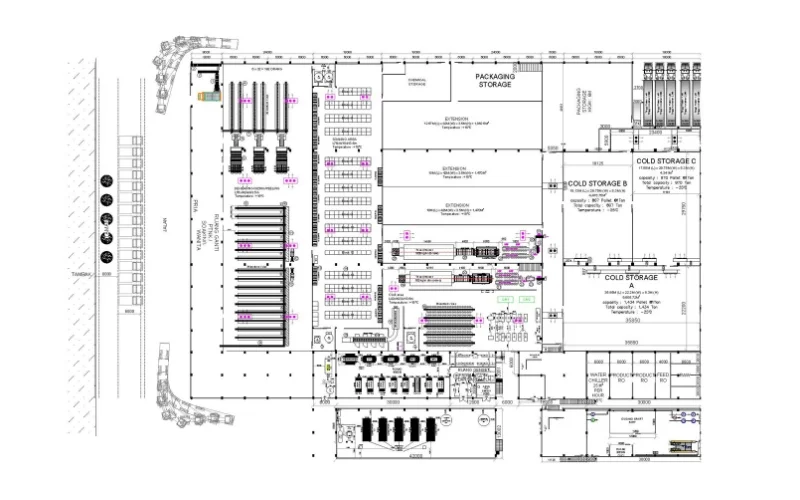
Freezing Quality Comes First
Self-stacking or spiral freezers should be selected on the basis of the product and not on the basis of the required machine space.
Product Shape and Size
The freezing capacity of products depends on several parameters like product type, unit weight, water content, stacking density and temperature. Thus, the nominal capacity of a freezer model is not the only criterion to choose the right equipment for a plant. Before selecting the appropriate freezer model, the following parameters have to be fixed for the products to be frozen: product size, loading density, inlet temperature and outlet core temperature of the storage rooms as well as the packaging of the products to be frozen.
Airflow and Heat Transfer
MOON-TECH spiral freezers use a closed-loop air circulation system, independent freezing zones, and efficient airflow through the open-mesh conveyor belt to promote uniform heat transfer and consistent freezing performance. Faster freezing, higher production and lower weight loss are the main goals of this design. Uniform airflow is essential because uneven air distribution can create inconsistent freezing rates, product temperature variations, and quality problems.
Weight Loss and Product Appearance
The method of quick freezing can affect the amount of drip loss, surface dehydration and end product appearance. Freezing performance and product weight loss vary with equipment design, airflow, freezing time, and product characteristics. Performance results from tunnel freezers should not be applied directly to spiral freezer systems without product-specific testing.
Floor Space and Production Flow
Spiral freezer systems are preferred as they allow a longer belt to be installed within a smaller floor area compared to a straight tunnel freezer.
Layout Fit
The freezer must fit into the production line. This includes height of feeding in, direction of discharge, position of maintenance aisles, position of doors, design of drains and position of refrigeration lines. A compact design is of no use if the machine cannot be cleaned and maintained.
Upstream and Downstream Equipment
Food enters the freezer from forming, cooking, cooling, coating, or packaging preparation. After freezing, it may go to glazing, weighing, packing, or cold storage. The freezer selection should match the full process rather than stand alone.
Cold Storage Connection
Following quick freezing, products are typically stored in cold storage. The freezer and downstream cold storage should be designed as connected parts of the production system. Matching freezing throughput with cold room capacity and storage temperatures helps prevent bottlenecks and supports consistent product quality.
Sanitation and Cleaning
The cleaning of a frozen food plant is not a marginal matter.
Stainless Steel and Open Access
МУНА-ТЕХ spiral freezer designs incorporate high-strength stainless steel mesh belts and supporting structures intended to improve cleaning access and reduce hard-to-clean areas. Inspect belt access, main structure enclosure panels, drain points, evaporator cleaning and maintenance access.
Food Safety Environment
Quick-freezing equipment must be designed and operated for hygienic food processing environments. Equipment materials, structural accessibility, cleaning procedures, and sanitation requirements should be evaluated against applicable food safety standards. Compliance and cleanability must be verified for each installation rather than assumed from equipment design alone.
Defrost and Water Use
The defrost planning affects the amount of downtime, water used and the needed sanitation. The required defrost frequency should be determined according to product moisture, daily operating hours, air conditions, and evaporator frost accumulation.
Refrigeration System Support
Spiral freezers are dependent on a suitable refrigeration system.
Capacity and Evaporating Temperature
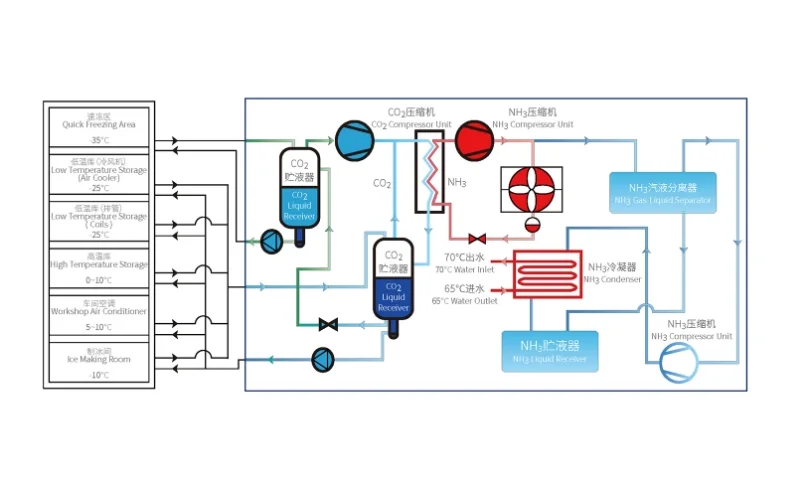
The refrigeration capacity of a spiral freezer must be matched with the compressor unit, evaporator, condenser, pumps, valves, and control system. Depending on the required freezing temperature and plant conditions, MOON-TECH screw compressor units and CO2 refrigeration systems may be considered as part of the overall refrigeration solution.
CO2 and Low-Temperature Options
CO2 refrigeration systems can serve low-temperature applications such as individual quick freezers, quick-freezing rooms, and cold storage facilities in medium- and large-scale seafood processing plants. Refrigerant selection should account for the required temperature, plant capacity, local climate, operating conditions, and service capabilities.
Service and Commissioning
During the service stage of the freezer’s life, aspects such as belt tracking, airflow balance, evaporator condition, defrosting and operator instruction can affect the final product.
Questions Before Final Purchase
Before purchasing a spiral freezer, food processing plants should verify product compatibility, required freezing capacity, refrigeration performance, sanitation requirements, and maintenance access to avoid costly equipment selection mistakes.
Product Testing
MOON-TECH has a quick-freezing test laboratory designed to evaluate product freezing performance under simulated processing conditions. Shrimp, dumplings, poultry pieces, vegetables, and prepared meals have different freezing characteristics. Product testing helps determine suitable freezing times, airflow conditions, conveyor speeds, and outlet core temperatures before equipment selection.
Refrigeration Room Capacity
A poor refrigeration room can impair performance of a spiral freezer. Check the capacity of the compressor unit, the design of the evaporator, the defrosting method, the choice of refrigerant and the controls. For new food processing plants or major freezer-line expansions, MOON-TECH’s full-process consultation service can support refrigeration load assessment, equipment matching, and system integration planning.
Project and Service Fit
MOON-TECH provides equipment and project services covering refrigeration system design, installation, commissioning, and ongoing technical support. Food processors can контакт MOON-TECH to discuss product samples, production capacity, freezing requirements, and integration with existing cold storage facilities.
Вывод
When selecting a self-stacking spiral freezer, food processing plants should consider a number of factors including product behavior, airflow, freezing capacity, floor space, cleaning, refrigeration and access. MOON-TECH offers quick-freezing equipment and integrated industrial refrigeration solutions that can be matched to specific product characteristics, production capacity, sanitation requirements, and cold storage conditions.
Часто задаваемые вопросы
What Should Plants Check Before Buying a Spiral Freezer?
Product: check size. Inlet temp, outlet core temp, loading density, required product through put, floor space requirements, sanitation and service access.
Why Is Airflow Important in Spiral Freezing?
The airflow affects the rate of freezing, the uniformity of the products, the surface quality and the weight loss.
Can One Spiral Freezer Capacity Fit Every Product?
No. Freezing capacity is affected by product type, shape, weight, water content and temperature condition.
Should the Freezer Be Selected Separately from Cold Storage?
No. The freezer, the refrigeration system and the cold storage rooms should be planned within the production flow.