
Refrigeration of a process, stream or storage area is required where normal comfort cooling is not sufficient. In the case of an oil and gas operator, design of refrigeration systems must consider the gas composition, pressure and moisture content and then design for the required degree of liquefaction as well as safe storage and possible transport. MOON-TECH designs and manufactures refrigeration and heating systems and undertakes integration of such systems into one-stop turnkey projects. This engineering guide sets out the key considerations when evaluating industrial refrigeration packages for associated gas treatment.
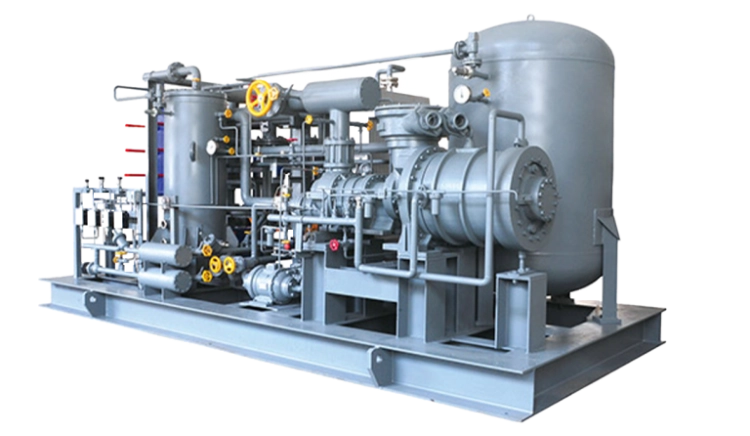
Industrial Refrigeration and Process Requirements
Industrial refrigeration typically involves circulating a refrigerant through a cycle in which it picks up heat in an evaporator and then dumps heat in a condenser. A simple vapor-compression refrigeration cycle includes a compressor, a condenser, an expansion valve and an evaporator. Note that this cycle is very different from compressing a gas to increase its pressure to be used in a process. Refrigeration is all about moving heat whereas gas compression is all about increasing pressure on a process gas.
In early design of a gas-treatment train, both duties may be needed. In order to gather or to supply as fuel a gas first has to be compressed. In order to prepare this gas for a subsequent step of liquefaction, the cooling and dehydration of the gas stream has to take place in the treatment train. By mixing these two duties into a generic “refrigeration load” important questions concerning required pressure and temperature, amount of water, and required materials might be hidden before adequate equipment is selected.
Cooling Duties and System Boundaries
Heat Removal
First identify the stream to be cooled. Define the inlet and the target conditions for this stream. Also define where the heat input to this stream originates, i.e. from equipment, from piping, from the ambient, from compression etc. Then define whether the refrigeration package cools a circulating fluid, supports a gas treatment step or is required for a cryogenic process. Keep the refrigeration-side duty separate from the gas-side mass balance.
Pressure Control
All major components of a refrigeration cycle such as compressor, condenser, expansion device and evaporator are operated at given pressure levels. Changing the condensing conditions influences the compressor’s duty; changing the evaporating conditions influences the available process temperature. Therefore, in a design review the connection of pressure instruments, control, relief etc. within the allowed operating envelope has to be checked and not only the nameplate temperature of a component.
Moisture Management
Dehydration of a gas-treatment system can be performed by cooling a gas mixture to condense out components of interest or water. However, in order to have a complete gas-treatment system a dehydration step must be well-defined. The associated-gas solution provided by MOON-TECH includes a complete process description from compression to cooling, dehydration, liquefaction, storage and transport. Your specification should detail where water is removed, what cold equipment receives and how liquid handling is controlled.
Associated Gas Treatment and Liquefaction
Compression and Recovery
An NG Compression Skid is described for use in gas-gathering service and for fuel-gas supply service. An Associated Gas Compression Unit is described to improve energy recovery from the associated gas in oil-production plants. The above are separate pieces of equipment and hence a packaged solution should be offered after clearly identifying the source of the gas, the suction service and the discharge service requirements and the gas composition.
Cooling and Dehydration
Use the oilfield process description to define a useful review framework for the engineering team: 1) define the compression process; 2) define the required cooling duty; 3) verify that sufficient water is removed; and 4) verify what you have defined actually gets to the liquefaction system. Do not use the process sequence as a means to promise recovery, energy savings or reduced costs to operate.
Mixed Refrigerant Cycle
The described methane liquefaction system uses the Mixed Refrigerant Cycle, or MRC. This process enables cryogenic liquefaction of methane from associated gas to support downstream storage and transportation. Those statements identify the process route and use; actual performance, composition limits, and controls still require project-specific confirmation.
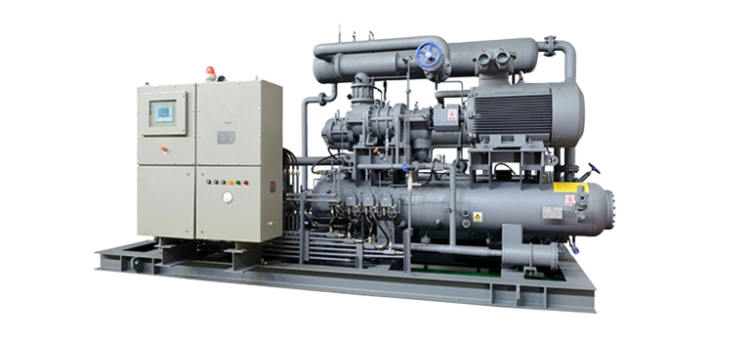
Equipment Selection and Integration
Gas Composition
Gas composition can influence selection of the suitable compressor, seal design, appropriate material, cooling duty and dehydration solution. The solution material can be specifically designed for methane service or for special-gas service. Request a complete gas composition envelope including all contaminants. Also request pressure- and flow-range as well as the upset cases.
Control Architecture
Refrigeration systems require the coordination of multiple functions such as compressor protection, pressure management, temperature measurement, liquid handling, and shutdown control. A list of functions for a fully automatic control system for a methane-liquefaction plant may be provided. The final control narrative must then detail permissives, alarms, trips, manual actions and restart actions for your specific site.
Project Interface
The scope of integration includes technical consultancy, project planning, design of the system and selection and procurement of equipment and its installation and commissioning. The utility boundaries and associated pipework, electrical connections, instrumentation, foundations, venting, access and the commissioning tests should all be defined within the same interface register. A clear interface is more valuable than customized sales blurb.
Operating Records and Lifecycle Support
Baseline Data
Record suction and discharge pressures, process temperatures, flow, liquid levels, refrigerant condition, gas composition, and alarm history at stable operation. Trends help you distinguish a process change from a refrigeration fault. Keep the baseline tied to a defined operating condition rather than treating one reading as a permanent guarantee.
Maintenance Planning
Maintenance, system upgrades and operator training are part of the lifecycle services offered by the provider. A maintenance calendar should contain the inspection access, the instruments, filters, valves, the compressor oil systems, the heat-transfer surfaces and the control backups. The actual time frame for the maintenance is based on the manufacturer’s instructions, the severity of use and the results of the last inspection.
Service Coordination
Intervene on individual units by getting operations, process, maintenance and package supplier aligned on single isolation/restart strategy. Frame early project requirements through full-process consultation. Enable wider scope of delivery through technical consulting and project planning. Track all changes against revision controlled drawings and operating records.
Your Next Industrial Refrigeration Project
Use your next review of the solution to look at the gas composition, pressure and flow envelope, the cooling targets, the dehydration boundary, the liquefaction route, the utility conditions and the lifecycle responsibilities. Solution material describes a complete process from compression to storage and transport but it does not constitute a site design basis for a project. Compare suppliers on evidence, interface, control philosophy, commissioning, service. For a project discussion view the Solución para el desarrollo de campos de petróleo y gas and the turnkey engineering services offered. Then send a structured enquiry from the contact page.
Preguntas frecuentes
Q1: What is industrial refrigeration?
Industrial refrigeration is defined as process cooling, which removes heat at given industrial temperatures, pressures and flow conditions, and with certain operating constraints.
Q2: Is refrigeration the same as gas compression?
Answer: No. Refrigeration is a cycle that moves heat. However, in order to compress process gas, an oil and gas train may require both duties.
Q3: Where does dehydration fit in associated-gas treatment?
The dehydration step should be included in the compression, cooling, liquefaction, storage and transportation process description. The exact boundary for the equipment should be specified for the project.
Q4: What is the MRC process used for?
The solution material describes the process that is implemented by the methane liquefaction system, Mixed Refrigerant Cycle.