
Screw refrigeration compressor units can be a strong choice for large cold storage systems, especially when the facility operates for long hours, serves several temperature zones, or combines processing, quick freezing, and frozen storage. They are not automatically better for every project, however. The right decision depends on refrigeration load, evaporating temperature, refrigerant, part-load demand, maintenance capability, and future expansion.
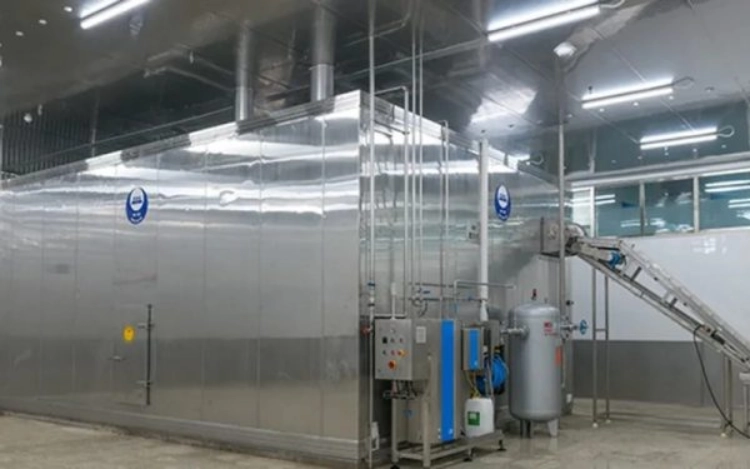
This becomes especially clear in seafood processing. A large seafood facility may need chilled receiving areas, low-temperature processing rooms, plate freezers, individual quick freezers, blast freezers, glazing lines, and frozen storage rooms. Instead of selecting the compressor separately, the buyer should evaluate how it fits the complete Seafood Processing Solution.
Teknologi Bulan integrates refrigeration equipment, freezing equipment, cold storage, controls, installation, commissioning, training, and after-sales support for seafood processing projects. Within this system, the screw compressor unit supports the refrigeration demand rather than acting as a stand-alone purchase.
Screw Compressor Fit in Large Seafood Cold Storage
Large, Continuous and Mixed Loads
Seafood processing facilities often operate for long periods and experience several loads at the same time. Fresh raw material may enter the plant while another batch is being frozen, packaged products are transferred into cold storage, and doors open repeatedly during loading.
A screw refrigeration compressor unit can suit this operating pattern because it can serve substantial and relatively continuous refrigeration loads. Multiple units can also be arranged so that the system follows changing demand instead of relying on one compressor to handle every condition.
The load calculation should cover product heat, transmission heat, infiltration, equipment, workers, lighting, defrost cycles, and product pull-down time. Selecting the compressor only from cold room volume can result in unstable suction pressure, unnecessary cycling, or insufficient freezing capacity during production peaks.
Low-Temperature Freezing and Storage
Seafood quality depends on moving through the critical freezing zone quickly and maintaining a stable storage temperature afterward. Plate freezing, blast freezing, brine freezing, and IQF processes can place much heavier demands on a refrigeration system than ordinary chilled storage.
MOON-TECH offers single-stage, compound two-stage, and skid-mounted separate two-stage screw compressor arrangements. The appropriate configuration depends on the required evaporating and condensing temperatures, compression ratio, refrigerant, daily operating hours, and system layout.
Two-stage compression may be considered for demanding low-temperature duties, but it should not be specified solely because the cold room operates below 0°C. Engineers must calculate the actual compression ratio and compare efficiency, discharge temperature, equipment cost, and maintenance requirements.
When Screw Units May Not Be the Best Choice
A screw unit may be unnecessarily large for a small cold room with light, intermittent demand. Smaller facilities with simple medium-temperature storage may achieve better operating economics with another compressor arrangement.
The practical question is not whether screw technology is universally superior. It is whether the unit can operate efficiently through the facility’s normal load range. Buyers should compare annual operating performance, not only full-load cooling capacity.
Technical Features Buyers Should Compare
Part-Load Regulation
Cold storage rarely operates at one fixed load. Intake volume changes, freezing lines start and stop, ambient conditions vary, and defrost cycles temporarily affect demand. Good part-load regulation helps the compressor respond without excessive cycling or unstable suction conditions.
MOON-TECH screw units can use spool-valve regulation and variable-frequency control, depending on the selected configuration. Buyers should ask how capacity is adjusted, what the minimum stable operating capacity is, and how the control system coordinates multiple compressors.
Internal volume-ratio control also matters when operating conditions change. A mismatch between the compressor’s internal pressure ratio and the system pressure ratio can create unnecessary power consumption. The supplier should explain how the selected unit responds across both design and part-load conditions.
Oil Management and Heat Rejection
Oil management affects bearings, rotor sealing, discharge temperature, and long-term reliability. A large seafood cold storage system should be reviewed for oil supply method, oil separation efficiency, oil cooling capacity, filtration, oil return, and access for inspection.
MOON-TECH uses forced oil supply together with differential-pressure oil supply in its screw compressor unit range. The available arrangements also include different oil separation methods and refrigerant-cooled oil coolers.
These components must be matched to the actual operating condition. A reliable compressor still needs correctly sized condensers, stable liquid supply, clean heat-transfer surfaces, and suitable control logic.
Single-Stage or Two-Stage Arrangement
Single-stage units may suit moderate compression ratios and general cold storage duties. Compound or separate two-stage arrangements may be evaluated for colder freezing applications and higher compression ratios.
The final choice should be based on the entire refrigeration system. Evaporating temperature, condensing temperature, intermediate pressure, refrigerant properties, oil temperature, motor load, and annual running profile all influence the result.
How the Seafood Processing Solution Uses Screw Units
One System from Receiving to Frozen Storage
A seafood cold storage project normally includes more than a compressor room. Raw material receiving, washing, grading, processing, freezing, glazing, packaging, frozen storage, and loading must be connected through a controlled product flow.
The MOON-TECH seafood processing solution covers project planning, engineering design, equipment supply, installation, commissioning, staff training, and after-sales service. This allows the refrigeration system to be sized around production capacity and product movement instead of treating every room as an isolated load.
The compressor selection can then be coordinated with freezer capacity, storage turnover, room temperature, refrigerant distribution, defrost schedules, and anticipated expansion.
Quick-Freezing Equipment and Airflow
The freezing method should match the seafood product. Plate freezers are suitable for packaged blocks and products requiring efficient contact freezing. Air blast freezers provide flexibility for different product forms. Brine systems can support rapid freezing in suitable shrimp and seafood applications, while IQF equipment helps keep individual products separate.
MOON-TECH quick-freezing equipment range includes fluidized, intelligent tunnel, plate, and spiral quick freezers. The seafood solution also includes quick-freezing rooms and two-stage saltwater spray freezing that combines spraying with air cooling.
Compressor capacity must follow the selected freezing process. A cold room designed only for product storage does not have the same load profile as an IQF line receiving warm product continuously.
Controls, Hygiene and Service Access
Seafood facilities must control temperature while maintaining hygienic production. MOON-TECH’s seafood solution incorporates design and supply around HACCP requirements, connecting refrigeration performance with the processing environment.
The control system should monitor suction and discharge pressure, oil pressure, oil temperature, liquid level, motor current, room temperature, freezer operation, and alarm history. Where multiple compressors are installed, the controller should sequence them according to load rather than allowing every unit to operate inefficiently.
Service access should be planned around valves, filters, oil separators, electrical cabinets, heat exchangers, pumps, and sensors. MOON-TECH’s refrigeration services include installation and commissioning, maintenance, consultation, and technical training.
Real Seafood Processing Project Examples
Ecuador Shrimp Processing Project
yang Ecuador Promarosa Shrimp Processing Project shows why compressor selection should be tied to the complete processing system.
The facility handles 80 tons of Pacific white shrimp per day. Its refrigeration system includes five plate freezers, one air-cooled individual freezer, one brine freezing line, two quick-freezing rooms, and 650 tons of cold storage capacity. Eight screw compressors support the combined freezing and storage requirements.
The project combines plate, brine, and air freezing instead of forcing every product through one process. Centralized refrigeration supports the different production and storage zones while giving the plant flexibility for changing processing needs.
Large-Scale and Turnkey Seafood Projects
MOON-TECH’s seafood solution also includes the Haidu Ocean Product project in China. The multiphase development has a total cold storage capacity of 400,000 tons and an annual processing capacity of 1 million tons. The first phase includes 100,000 m² of cold storage, 12 IQF units, and 20 air blast freezers, with a combined freezing capacity of nearly 500 tons per cycle.
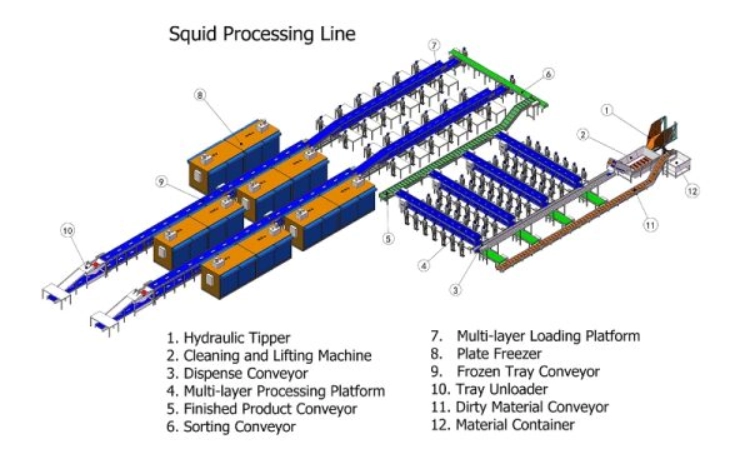
yang Haidu squid processing facility in Peru provides another system-level example. The 6,000 m² turnkey facility covers receiving, processing, cooking, glazing, freezing, packaging, waste treatment, and supporting functions. Its freezing configuration includes plate freezers, vibratory-belt IQF equipment, glazing and secondary freezing systems, and a blast freezer.
These projects demonstrate that the compressor should be selected from the processing load and production flow, not from the cold storage area alone.
Selection Questions for Buyers
Match the Unit to the Actual Load Profile
Before requesting a quotation, buyers should provide daily processing capacity, incoming product temperature, target core temperature, freezing time, cold room volume, storage turnover, operating hours, door activity, defrost method, and local ambient conditions.
The supplier should then explain which loads can operate simultaneously and how many compressor units are needed. A design that performs well at peak capacity should also remain stable during low production periods.
Confirm Refrigerant and Capacity Control
Refrigerant selection affects system pressure, efficiency, safety requirements, equipment room design, operator training, and local compliance. Buyers should not select a refrigerant only because it is used in another seafood plant.
Ask how compressor capacity will be regulated, how the units will be sequenced, and whether variable-frequency control is appropriate. The proposal should also describe the expected operating range rather than providing only one rated point.
Plan Maintenance and Future Expansion
A large cold storage facility may add another processing line, freezer, or storage room after commissioning. The original design should identify whether compressors, condensers, vessels, pumps, piping, and electrical systems have enough reserve capacity.
Maintenance planning should include spare parts, oil and filter replacement, vibration monitoring, safety checks, control backups, and operator training. Buyers can provide their processing capacity and site information through the MOON-TECH halaman kontak before final equipment selection.
Kesimpulan
Screw refrigeration compressor units can be better for large cold storage systems when the facility has substantial, continuous, and variable refrigeration loads. They are particularly relevant to seafood plants that combine processing rooms, quick freezers, blast freezers, plate freezers, and frozen storage.
The compressor should still be selected as one component of the complete Seafood Processing Solution. Load calculation, freezing method, refrigerant, part-load regulation, oil management, airflow, controls, hygiene, maintenance, and expansion planning must work together. The best unit is not simply the largest screw compressor; it is the one that supports stable production and efficient cold storage throughout the project’s operating life.
FAQ (Pertanyaan umum)
Are Screw Refrigeration Compressor Units Always Better for Large Cold Storage?
No. Screw units are often suitable for large and continuously operated systems, but the final choice depends on load range, temperature, refrigerant, operating hours, maintenance resources, and project economics.
Why Are Screw Compressors Suitable for Seafood Processing?
Seafood facilities may operate several freezing and cold storage loads simultaneously. Screw compressors can support substantial continuous loads and can be arranged in multiple-unit systems for changing production demand.
Should a Seafood Plant Use Single-Stage or Two-Stage Compression?
The choice depends on evaporating temperature, condensing temperature, compression ratio, refrigerant, discharge temperature, and operating profile. Low-temperature freezing applications may justify a two-stage arrangement, but the decision requires engineering calculation.
What Equipment Should Be Matched with the Compressor?
The compressor should be coordinated with condensers, vessels, pumps, evaporators, air coolers, plate freezers, IQF equipment, blast freezers, piping, valves, defrost systems, and controls.
What Information Is Needed Before Selecting a Screw Unit?
Buyers should provide product type, daily processing capacity, incoming and target temperatures, freezing time, storage volume, room temperatures, operating schedule, ambient conditions, refrigerant preference, site power supply, and expansion plans.