
A shell and tube chiller should be selected from the actual heat-transfer duty, fluid properties, water quality, design pressure, pressure drop, fouling risk, cleaning method, load range, and maintenance access. Nominal cooling capacity alone is not enough for an industrial refrigeration project.
When soliciting heat-exchange equipment, procurement documents for the same heat-exchange assembly may refer to this equipment as a Shell & Tube Heat Exchanger, a Chiller Shell & Tube, or Chiller Barrel, Shell & Tube. The key information a buyer must receive to adequately specify this equipment is what fluids are flowing on each side of the heat-exchange tubes, the entering and leaving fluid temperatures, the allowed pressure drop across the heat exchanger, the recommended materials of construction, and the intended inspection of the heat-exchange assembly after it has been installed.
MOON-TECH develops heat exchange equipment together with refrigeration, compressor, heating, and energy systems. Its manufacturing capability includes automatic tube-to-tube-sheet welding, while its refrigeration equipment uses high-efficiency heat exchange tubes and is supported by compressor performance testing and lifecycle engineering services.
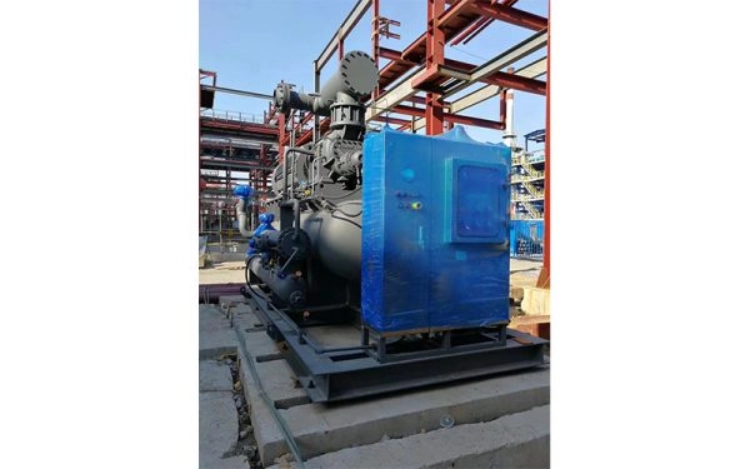
What Should You Check Before Selecting a Shell and Tube Chiller?
Turn the cooling request into a checkable design duty before comparing equipment. Otherwise, selection can be based on assumed temperatures or clean-water conditions that do not match the plant.
Heat Duty, Temperatures, and Flow
Record the following information for the hot and cold sides: inlet temperature and outlet temperature and either mass flow rate or volume flow rate and fluid properties. Also record the number of hours of operation, the startup condition and the expected peak duty. The approach temperature between the two fluids affects the required heat transfer area. A smaller approach normally demands more area and may change pressure drop, footprint, and cost.
Check more than the full-load point if process flow varies. Low flow can deteriorate heat transfer while excessive velocity can cause increased pressure loss and potentially erosion. A workable operating envelope for the selected shell and tube chiller is required.
Water Quality, Fouling, and Fluid Compatibility
Water hardness, suspended solids, chlorides, oil, process contamination, and biological growth can reduce heat transfer over time. Ask for the design fouling factor and the cleaning assumption used in selection. Choose the material for the pipeline on the basis of the actual fluid chemistry, temperature, pressure and corrosion risk, rather than choosing stainless steel or copper as a default.
Design Pressure and Pressure Drop
Confirm design pressure on both shell and tube sides and compare it with the maximum system pressure, pump head, static head, and possible transients. Allowable pressure drop should be stated separately for each side. A unit can meet thermal duty and still create a poor system if the pressure drop is too high for the available pumps.
How Do Shell-Side and Tube-Side Choices Affect Performance?
Shell-and-tube performance depends on fluid allocation, velocity, and cleaning access. These choices belong in the design review, not at the end of fabrication.
Fluid Allocation and Material Selection
Typically, fouling or cleanable fluids are placed in locations that can be easily inspected for cleaning. Other considerations for side placement are pressure, corrosion, phase change and leakage allowance. Ask the supplier why they have assigned a particular fluid to the shell side versus the tube side. The designer’s decision in this area can affect required wall thicknesses, type of gasket or seal required and service access.
Velocity, Approach Temperature, and Heat-Transfer Area
Heat-transfer coefficient, surface area, temperature difference, and flow pattern work together. Higher velocity can improve heat transfer but increases pressure drop. More surface area can reduce temperature approach, but it adds size and cost. The design should balance these variables for the real duty rather than maximize one performance figure.
For buyers who are still comparing the equipment concept itself, the earlier guide on shell and tube chiller selection covers the main features and benefits used in industrial chiller applications.
Inspection and Cleaning Access
Review removable covers, channel access, drain and vent points, isolation valves, tube-pulling clearance where applicable, and the space needed for cleaning tools. Maintenance access should be checked against the final plant layout. A theoretically efficient exchanger is a poor choice if routine inspection requires dismantling nearby piping or equipment.
How Should a Shell and Tube Chiller Handle Changing Load?
Industrial cooling demand changes during startup, production peaks, product changeovers, idle periods, and seasonal operation. The heat exchanger, compressor, pumps, and controls should be evaluated as one refrigeration package.
Part-Load Heat Transfer
At part load, fluid flow and temperature difference can move away from the design point. Ask how the exchanger performs at minimum expected flow and whether the control strategy maintains stable leaving temperature without excessive cycling. For systems with variable-flow pumps, check the minimum flow needed to protect heat-transfer performance.
Compressor and Oil-System Interaction
The evaporator or condenser cannot be reviewed in isolation from the compressor package. MOON-TECH screw refrigeration compressor units use energy regulation, refrigerant-cooled oil cooling, oil separation, forced and differential-pressure oil supply, automatic protection, and operating-data recording. Changes in heat-exchanger performance can shift suction or discharge conditions and increase compressor or pump workload.
Controls and Safeguards
Ask for the sensor list, temperature and pressure control sequence, flow protection, alarm limits, shutdown logic, communication interface, and manual override conditions. Fouling, blocked flow, low flow, or abnormal pressure should be visible to operators before they develop into a production interruption.
What Manufacturing and Maintenance Details Should Buyers Verify?
A shell and tube heat exchanger contains many joints and heat-transfer surfaces, so manufacturing consistency and a practical maintenance plan both affect long-term performance.
Tube-to-Tube-Sheet Quality
MOON-TECH uses tube and tube-sheet fully automatic welding robots and an automatic heat-exchange-tube welding system. When comparing suppliers, ask how tube joints are fabricated and inspected, what pressure or leak tests are performed, and how material traceability is controlled. Manufacturing process descriptions are useful only when they are tied to verifiable quality checks.
Fouling and Corrosion Prevention
Preventive maintenance should be based on the actual water and process conditions. Establish inspection intervals, cleaning methods, corrosion checks, water-treatment responsibilities, and trigger points for intervention. A broader review of heat exchanger solutions can help buyers compare where different exchanger designs fit before setting the maintenance plan.
Do not wait for a large capacity loss before cleaning. A gradual rise in approach temperature or pressure drop can be an early sign of fouling, even while the chiller is still meeting the process temperature.
Performance Tracking
Trend inlet and outlet temperatures, flow, pressure drop, approach temperature, compressor operating conditions, pump status, and alarms. Comparing these values with the clean commissioning baseline makes it easier to separate heat-exchanger fouling from refrigerant, control, or pump problems. MOON-TECH includes system diagnosis and upgrade in its servicio de ciclo de vida scope.
How Should Buyers Review Supplier Scope Before Purchase?
A good technical offer should make the design basis and equipment boundary visible, including what was selected, the required site work, and how the finished system will be accepted.
Engineering Scope
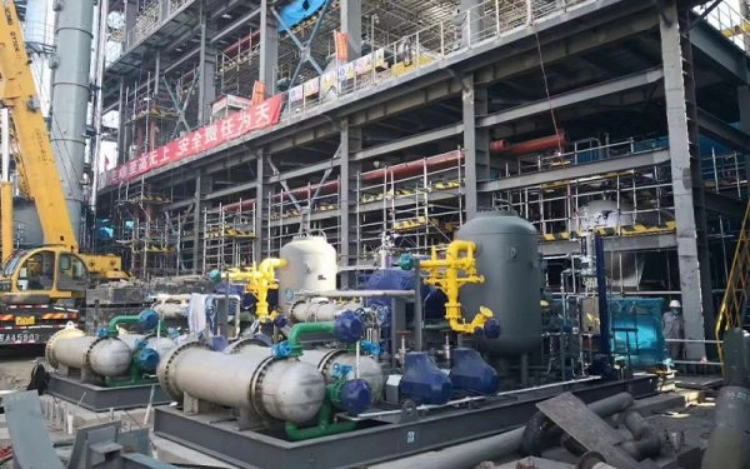
Request the duty sheet, fluid data, materials, design pressure, allowable pressure drop, fouling factor, connection sizes, insulation requirement, equipment dimensions, service clearances, control points, and interface list. In refining, petrochemical, chemical processing, and other continuous-process plants, shell-and-tube chillers are often integrated into chilled-water or low-temperature process cooling systems. MOON-TECH’s refining and petrochemical cooling solutions combine refrigeration equipment, heat exchangers, compressors, controls, and engineering support for these process-cooling applications.
Documents and Commissioning
The handover package should include approved drawings, data sheets, material information, test records, control sequence, alarm list, operation and maintenance instructions, commissioning records, and training. Site acceptance should verify both thermal performance and safe system operation under the agreed working condition.
Service and Future Operating Changes
Ask how the supplier will support cleaning, troubleshooting, replacement parts, control changes, and future duty changes. If process temperatures, fluid composition, or production rate may change later, identify which design limits are likely to become constraints before the equipment is purchased.
Conclusión
A shell and tube chiller should be judged as part of the complete industrial refrigeration system. Check heat duty, fluid allocation, materials, fouling factor, pressure drop, design pressure, inspection access, part-load operation, controls, manufacturing quality, commissioning, and service support together. That gives the buyer a much stronger basis for comparing shell and tube chiller barrel options than nominal capacity alone.
Preguntas frecuentes
What is the main purpose of a shell and tube chiller?
It transfers heat between two fluid circuits so the required cooling duty can be achieved within the specified temperature, flow, and pressure conditions.
What is a shell and tube chiller barrel?
It is a common industry term for the shell-and-tube heat exchanger used as an evaporator or condenser in a chiller or refrigeration package. The exact configuration depends on which fluid and refrigerant are assigned to each side.
Why do fouling and corrosion need to be checked before selection?
They can reduce heat-transfer performance, increase pressure drop, damage tube or shell materials, and shorten cleaning intervals. The design should reflect the actual water and process chemistry.
Should a shell and tube heat exchanger be selected separately from the compressor?
No. The exchanger, compressor, oil system, pumps, controls, refrigerant conditions, and process flow interact. They should be checked as one operating system.
What documents should a buyer request before purchase?
Request the design basis, duty sheet, materials, pressure and pressure-drop limits, drawings, test records, control sequence, maintenance instructions, commissioning plan, and acceptance criteria.